

Category: Marketing

  • Latest American Hartford Gold Review (2025): Is AHG Worth Your Gold IRA Investment?

    Latest American Hartford Gold Review (2025): Is AHG Worth Your Gold IRA Investment?

    American Hartford Gold Review

    Focus: American Hartford Gold review

    Table of Contents

    1. Introduction & Why This Review Matters
    2. What Is American Hartford Gold (AHG)?
    3. AHG’s Core Offerings & Business Model
    4. Customer Reviews & Reputation Analysis
    5. Fees, Pricing Transparency & Costs
    6. Complaints, Risks & Red Flags
    7. AHG vs Competitors & Alternatives
    8. Suitability: Who Should (or Shouldn’t) Use AHG
    9. Final Verdict: Is AHG Worth It?
    10. Frequently Asked Questions (FAQ)

    1. Introduction & Why This Review Matters (American Hartford Gold review)

    American Hartford Gold Review

    Investing in a Gold IRA or physical precious metals requires trust, clarity, and a strong track record. Many providers make bold claims, but the difference often lies in hidden fees, buyback policies, delivery reliability, and customer support.

    In 2025, American Hartford Gold (often abbreviated AHG) is among the better-known names in this space. This review digs into what’s credible, what’s concerning, and whether AHG is truly worth your gold IRA investment. Using published reviews, complaints data, and third-party rankings, I aim to give you a grounded, comparative view.


    2. What Is American Hartford Gold (AHG)? (American Hartford Gold review)

    American Hartford Gold Review

    Origins, Mission & Leadership

    • American Hartford Gold positions itself as a U.S.-based precious metals dealer, focusing on gold, silver, and platinum, both for physical ownership and for IRA / retirement account rollovers. (Ibrinfo)
    • The company claims to have delivered over $1+ billion in precious metals to date and to be family-owned. (Ibrinfo)
    • AHG promotes endorsements from public figures (e.g. Bill O’Reilly, Rick Harrison) and highlights multiple Inc. 5000 recognitions as growth credentials. (American Hartford Gold)
    • It maintains accreditation with rating bodies—claims include an A+ BBB rating, “AA” BCA rating, and strong ratings on Trustpilot / ConsumerAffairs. (Ibrinfo)

    In theory, these credentials help establish trust. But credentials alone don’t guarantee a smooth or profitable investment. Let’s dive into how they operate and what users report.


    3. AHG’s Core Offerings & Business Model (American Hartford Gold Review)

    American Hartford Gold Review

    Products & Account Types

    AHG’s offerings include:

    • Physical precious metals (coins, bars) — gold, silver, platinum, and selected collectible/numismatic coins. (LendEDU)
    • Gold (or metals) IRAs / retirement account rollovers — enabling clients to move a portion of existing retirement/savings into a self-directed IRA backed by precious metals. (Ibrinfo)
    • Buyback / liquidation services — AHG promotes a buyback commitment (i.e. clients may liquidate metals back via AHG without extra fees) as part of their value proposition. (American Hartford Gold)
    • Promotional packages — e.g. “Freedom Package” (includes bonus silver, waived fees) as incentives for qualifying investors. (LendEDU)

    Account Setup & Process (American Hartford Gold Review)

    • The typical onboarding involves speaking with a specialist, filling out required forms, transferring funds from retirement accounts, and then purchasing metals. (LendEDU)
    • For IRA rollovers, AHG claims they handle trustee-to-trustee transfers, and that funding may take a few business days. (BP Trends)
    • Storage is performed at third-party secure vaults, such as Delaware Depository, Brinks, or International Depository Services (IDS). (Ibrinfo)
    • AHG often does not list public retail pricing directly on its website; prospective buyers must request quotes. (Ibrinfo)

    Unique Features / Selling Points (American Hartford Gold Review)

    • Buyback commitment with no additional liquidation fees (though actual buyback pricing is subject to market conditions). (Accesswire)
    • Promotional incentives like free silver, waived fees for certain periods, “No shipping fees” promo. (Accesswire)
    • Claims of price-match guarantees in some promotional materials. (Accesswire)

    These features are appealing to many buyers, but the true test lies in how consistently they are delivered and how hidden costs or spreads factor in.


    4. Customer Reviews & Reputation Analysis (American Hartford Gold Review)

    American Hartford Gold Review

    To assess how well AHG performs in practice, we examine third-party reviews, ratings, testimonials, and complaints.

    Trustpilot, ConsumerAffairs & Others

    • On Trustpilot, AHG is rated around 4.7 / 5 (with over 1,500 reviews) and many users praise the support, thoroughness, and patience of sales representatives. (Clute Journals)
    • ConsumerAffairs presents AHG as a “solid choice” for precious metals IRA or ownership, highlighting their buyback guarantee as a positive. (ConsumerAffairs)
    • Across review aggregators, ratings mostly fall in the 4.7 to 4.9 range. (Clute Journals)
    • Yahoo Finance reports AHG holds an A+ from the BBB and average customer rating of 4.89 out of 5. (Yahoo Finance)

    Overall, the visible online feedback is strongly positive, especially regarding customer service, ease of onboarding, and communication.

    Complaints & Negative Feedback (American Hartford Gold Review)

    However, negative reviews and formal complaints are also significant, particularly:

    • BBB complaints report missing metals, overcharging, poor responsiveness, and lack of transparency. (Better Business Bureau)
    • One complaint: Over $55,000 missing from a rollover account; calls and emails unresolved. (Better Business Bureau)
    • Others allege that AHG switched high-quality metals to fractional metals, charged excessive premiums, or manipulated buyback valuations. (Better Business Bureau)
    • Some complain of high spreads (the difference between purchase and resale) and charges that erode gains. (Better Business Bureau)
    • A user claimed an investment of $545,964 resulted in being “underwater” despite strong gold/silver markets, attributing this to hidden markups and unfavorable liquidation. (Better Business Bureau)

    These complaints are serious red flags, especially when involving high-dollar retirement accounts. Even when AHG responds “Resolved” in BBB, many users say they remain dissatisfied. (Better Business Bureau)

    Credibility Notes (American Hartford Gold Review)

    • Positive reviews tend to come from newer customers or those whose investments haven’t yet undergone liquidation.
    • Negative reviews often surface when clients request buybacks or challenge valuations after growth in precious metal prices.
    • The public record suggests a pattern: initial smooth onboarding but friction during exit/liquidation phases.

    So while the aggregate ratings look strong, the deeper user experiences suggest significant risk points.


    5. Fees, Pricing Transparency & Costs (American Hartford Gold Review)

    American Hartford Gold Review

    Even a reputable precious metals provider must be transparent about how it profits—through markups, spreads, margins, and fees. Let’s scrutinize AHG’s structure.

    What We Know (American Hartford Gold Review)

    • AHG does **not ** publish full coin/bar pricing on its website; quotes are by request. (Ibrinfo)
    • Shipping to vault is often covered (i.e. “free shipping”) as claimed in promos. (Accesswire)
    • IRA custodial and vault storage fees are generally paid to third-party custodians, not by AHG itself. These are typically about $180/year for maintenance, according to some sources. (Ibrinfo)
    • For promotional customers, fees may be waived for a certain time (e.g. first year). (Accesswire)

    Hidden Costs & Margins (American Hartford Gold Review)

    • Premiums & Markups: Many complaints center on excessive markups above spot price, especially for fractional or numismatic coins. (Better Business Bureau)
    • Spread on Buyback: Even if there’s “no liquidation fee,” the difference between the price you paid and the price at which AHG repurchases can be large. Some users report severe losses. (Better Business Bureau)
    • Lack of pricing transparency: Because you must call for quotes, there is less opportunity to compare across providers instantly. This opacity can favor the seller.
    • Storage & Custodial Fees: Though external, these fees erode returns, especially for smaller accounts.
    • Inactivity or miscellaneous service fees may apply (though not widely disclosed).

    Net Impact on Returns (American Hartford Gold Review)

    In an ideal scenario, gains in gold/silver prices offset all costs and still deliver profit. But if your cost basis is high due to markups, spreads, or misvalued buybacks, your effective gains may shrink or disappear—even when precious metal markets are strong.

    One complaint noted: despite gold and silver rising 30%+, the investor’s AHG account was still underwater. (Better Business Bureau) That reveals how dangerous high hidden margins can be.


    6. Complaints, Risks & Red Flags (American Hartford Gold Review)

    American Hartford Gold Review

    While AHG has many positive reviews, several risks and warning signs emerge:

    Common Complaint Themes (American Hartford Gold Review)

    1. Unclear Buyback / Valuation Practices
      Many complain that the price AHG pays on buyback differs sharply from spot price and from what the client expected. (Better Business Bureau)
    2. Overcharging & High Markups
      Several users suspect that AHG sells coins at inflated premiums (especially fractional or rare coins). (Better Business Bureau)
    3. Poor Communication / Non-Responsiveness
      Some investors report being unable to get updates, statements, or responsiveness when trying to liquidate or verify holdings. (Better Business Bureau)
    4. Switching of Metals / Replacement Issues
      A few allege their high-quality metals were replaced with lower-grade or fractional metals without proper disclosure. (Better Business Bureau)
    5. Lack of Transparency for Small Investors
      Many of AHG’s better terms (waived fees, promotional bonuses) apply only to higher minimum investments, making it less ideal for smaller or cautious investors. (Accesswire)
    6. Dependency on Long-term Holding
      Some customer service responses argue that losses must be overcome over long holding periods (“you have to wait”)—a risky pitch if your liquidity needs change. (Better Business Bureau)

    Structural & Market Risks (American Hartford Gold Review)

    • Precious metals don’t generate income — they rely solely on price appreciation.
    • Volatility in spot markets means timing of purchase and liquidation matters heavily.
    • Liquidity and spread risk in selling coins or bars, especially rare ones.
    • Counterparty risk when relying on AHG’s buyback promise (if the company faces financial trouble).
    • Regulatory risk or changes in tax law could affect IRA rules.

    Red Flag Summary (American Hartford Gold Review)

    Red FlagWhy It Matters
    Lack of upfront pricingLess ability to compare or negotiate
    Discrepancy between purchase and buybackReduces or wipes out gains
    Poor support or transparency during exitCan trap funds or frustrate investors
    Heavy incentive for larger accountsSmaller investors may get worse terms
    Reputation mismatches between positive reviews and serious complaintsIndicates possibility of cherry-picked or marketing reviews

    While none of these guarantee a bad experience, they underscore that due diligence is critical.


    7. AHG vs Competitors & Alternatives (American Hartford Gold Review)

    American Hartford Gold Review

    If you’re exploring precious metals IRAs or gold investing in 2025, you should compare AHG against alternatives to see what tradeoffs each offers.

    Key Competitors / Alternatives (American Hartford Gold Review)

    ProviderStrengthsWeaknesses vs AHG
    Augusta Precious MetalsStrong reputation, transparent fees, supportHigher minimums; fewer promotional bonuses than AHG (Ibrinfo)
    GoldcoGood buyback, established track recordLess promotional flexibility; possibly higher margins
    Patriot Gold / Birch GoldFast setup, transparent pricingMay lack bonus packages AHG offers
    Thor GoldStrong buyback practicesSmaller scale, potentially fewer product options
    Local / smaller vault dealersMore direct pricing, regional accessLess national brand, lower reliability assurances

    How AHG Stacks Up (American Hartford Gold Review)

    • Customer Support & Onboarding: AHG is often praised for guiding first-time precious metals investors.
    • Bonuses & Promotions: AHG is more aggressive in offering bonus silver, waived fees, and incentives.
    • Liquidity & Buybacks: Some competitors may offer tighter spreads or clearer buyback policies.
    • Transparency: Some rivals publish more pricing and margin info publicly.
    • Minimums: Some providers may allow lower entry levels or more flexible account structures.

    Your optimal choice depends on how much you plan to invest, your patience for long holding periods, and your tolerance for opaque pricing.


    8. Suitability: Who Should (or Shouldn’t) Use AHG (American Hartford Gold Review)

    American Hartford Gold Review

    Based on this review, here’s where AHG is a reasonable fit — and where it may be too risky.

    Good Fits (American Hartford Gold Review)

    • Investors rolling over substantial retirement balances (≥ $10,000+), giving more cushion to absorb fees/markups.
    • Those comfortable with long-term holdings, not needing frequent liquidity.
    • People who want hands-on guidance, personal support, and a firm to shepherd the process.
    • Investors are willing to ask detailed questions and negotiate pricing terms.

    Poor Fits / High Risk for (American Hartford Gold Review)

    • Investors with small balances (e.g. <$5,000), since fees and markups may eat into any gains.
    • People who may need partial or full liquidation soon.
    • Those who demand high transparency and want to compare pricing in real time.
    • Investors with low risk tolerance, especially for spread/valuation variance.
    • Anyone outside U.S. or non-IRA context where vaulting or logistics are complex.

    9. Final Verdict: Is AHG Worth It? (American Hartford Gold Review)

    So, after weighing the evidence, where does that leave AHG?

    Strengths

    • Solid brand reputation and strong ratings across review platforms
    • Supportive onboarding, especially for new precious metals investors
    • Real promotional offers and incentive structures
    • Accredited vaulting, custodial setup, and third-party storage
    • Buyback commitment (in principle)

    Weaknesses / Risks

    • High and opaque markups, especially for fractional or unique coins
    • Buyback spread and valuation differences that may erode returns
    • Significant complaints when clients try to liquidate
    • Limited pricing transparency
    • Advantages skewed toward larger investors

    If I were advising someone now (in 2025), my verdict would be:

    AHG can be a viable option — particularly for medium-to-large investors who are willing to commit long term and who demand a degree of white-glove support.
    But it is not a risk-free “set and forget” solution — you need vigilance, clear agreement on pricing and buyback terms, and realistic expectations around spreads and exit valuation.

    If you decide to invest via AHG, I’d recommend:

    • Requesting full pricing sheets and buyback policy in writing before committing
    • Comparing multiple coin quotes from competitors
    • Understanding your custodian and vaulting fees independently
    • Planning exit strategy and scenarios (liquidation under different market conditions)

    In short: AHG is not a scam, but neither is it perfect. Whether it’s “worth it” depends heavily on your investment size, duration, and risk tolerance.


    10. Frequently Asked Questions (FAQ) (American Hartford Gold Review)

    Q1. What is the minimum investment with AHG?
    AHG doesn’t publicize a strict minimum but many sources cite ~$5,000 or $10,000 for IRAs or rollover investments. (LendEDU)

    Q2. Do I own the physical metals in an AHG IRA?
    Yes — they are held in a secure depository under your name / custodial arrangement. (BP Trends)

    Q3. Can I liquidate / sell the metals anytime?
    AHG offers a buyback commitment with “no additional liquidation fees,” but actual buyback price depends on coin type and market spread. (Accesswire)

    Q4. Are there storage / annual fees?
    Yes — those are typically through the IRA custodian and depository (commonly ~$180/year). AHG may waive storage fees promotionally. (BP Trends)

    Q5. Is AHG a legitimate company?
    Yes — with BBB A+ rating, BCA AA rating, multiple positive reviews, and endorsements. But legitimacy doesn’t remove the risk of unfavorable terms.

    Q6. What are common pitfalls?
    High markups, spread at liquidation, poor transparency, and disputes during buyback are chief concerns.


  • Supercharge Your GoHighLevel SaaS with BoomerangMe Loyalty Add-ons (2025): The Ultimate Guide to Boosting Client Retention

    Supercharge Your GoHighLevel SaaS with BoomerangMe Loyalty Add-ons (2025): The Ultimate Guide to Boosting Client Retention

    GoHighLevel SaaS with BoomerangMe Loyalty Add-ons

    Introduction: Transform Your GoHighLevel Agency with Advanced Loyalty Solutions (GoHighLevel SaaS with BoomerangMe Loyalty Add-ons)

    Are you looking to differentiate your GoHighLevel agency and provide unmatched value to your clients? The integration of BoomerangMe loyalty add-ons with your GoHighLevel SaaS platform represents a game-changing opportunity to supercharge your agency’s offerings while dramatically improving client retention rates.

    In today’s competitive digital marketing landscape, businesses are desperately seeking solutions that go beyond basic CRM functionality. By incorporating BoomerangMe’s powerful loyalty management system into your GoHighLevel ecosystem, you can position your agency as the go-to solution for comprehensive customer relationship management.

    What is BoomerangMe and Why It Matters for GoHighLevel Users (GoHighLevel SaaS with BoomerangMe Loyalty Add-ons)

    BoomerangMe is a sophisticated loyalty program management platform that seamlessly integrates with existing business systems to create engaging, results-driven customer retention programs. When combined with GoHighLevel’s all-in-one marketing automation capabilities, this integration becomes a powerful force multiplier for your clients’ business growth.

    Key Benefits of BoomerangMe Integration:

    • Advanced customer segmentation capabilities
    • Automated loyalty point tracking and rewards distribution
    • Comprehensive analytics and reporting dashboards
    • Mobile-optimized loyalty card solutions
    • Seamless email and SMS marketing integration

    How BoomerangMe Enhances Your GoHighLevel SaaS Offering (GoHighLevel SaaS with BoomerangMe Loyalty Add-ons)

    1. Expanded Service Portfolio

    Traditional GoHighLevel agencies often struggle to differentiate themselves in an increasingly crowded marketplace. By adding BoomerangMe loyalty solutions to your service stack, you immediately expand beyond basic marketing automation into sophisticated customer retention strategies that deliver measurable ROI.

    2. Increased Monthly Recurring Revenue (MRR)

    Loyalty program management represents a premium service tier that commands higher monthly fees. Clients understand the value of customer retention – it costs 5-25 times more to acquire new customers than to retain existing ones. This makes loyalty add-ons an easy upsell opportunity.

    3. Improved Client Retention

    When your GoHighLevel clients see tangible improvements in their customer lifetime value through BoomerangMe integration, they become significantly less likely to churn. Happy clients with growing businesses rarely switch providers.

    Step-by-Step Implementation Strategy (GoHighLevel SaaS with BoomerangMe Loyalty Add-ons)

    Phase 1: Platform Integration

    Begin by establishing the technical connection between your GoHighLevel sub-accounts and BoomerangMe‘s API. This integration allows for seamless data flow between customer touchpoints, ensuring that loyalty activities automatically trigger appropriate follow-up sequences in your GoHighLevel workflows.

    Phase 2: Client Onboarding Process

    Develop a standardized onboarding process that introduces existing clients to loyalty program benefits. Focus on businesses with high repeat purchase potential – restaurants, retail stores, service providers, and subscription-based businesses represent ideal candidates.

    Phase 3: Performance Optimization

    Continuously monitor loyalty program performance through BoomerangMe‘s analytics dashboard while simultaneously tracking engagement metrics within GoHighLevel. This dual-platform approach provides comprehensive insights into customer behavior patterns.
    Maximizing ROI (GoHighLevel SaaS with BoomerangMe Loyalty Add-ons) : Best Practices for GoHighLevel + BoomerangMe Integration

    Automated Workflow Creation

    Design sophisticated automation sequences that respond to loyalty program milestones. When customers reach specific point thresholds, trigger personalized email campaigns, SMS notifications, or even direct mail pieces through GoHighLevel‘s comprehensive communication tools.

    Segmentation Strategies

    Leverage BoomerangMe’s customer segmentation data to create highly targeted marketing campaigns within GoHighLevel. Customers who consistently engage with loyalty programs exhibit different behavior patterns than one-time purchasers – customize your messaging accordingly.

    Cross-Platform Analytics

    Combine BoomerangMe’s loyalty-specific metrics with GoHighLevel’s broader marketing analytics to create comprehensive performance dashboards. This holistic view enables data-driven decision making that improves both customer acquisition and retention simultaneously.

    Competitive Advantages and Market Positioning (GoHighLevel SaaS with BoomerangMe Loyalty Add-ons)

    Unique Value Proposition

    Most GoHighLevel agencies focus exclusively on lead generation and basic nurturing sequences. By incorporating loyalty management, you address the complete customer lifecycle – from initial awareness through long-term advocacy. This comprehensive approach positions your agency as a true business growth partner rather than just another marketing vendor.

    Premium Pricing Justification

    Loyalty program management commands premium pricing because it directly impacts bottom-line revenue through improved customer retention. Unlike traditional marketing services that focus on vanity metrics, loyalty programs deliver measurable ROI that justifies higher monthly fees.

    Implementation Timeline and Success Metrics (GoHighLevel SaaS with BoomerangMe Loyalty Add-ons)

    30-Day Launch Plan

    Week 1-2: Technical integration and staff training 

    Week 3: Beta testing with select clients 

    Week 4: Full rollout and marketing campaign launch

    Key Performance Indicators

    Monitor these essential metrics to measure integration success:

    • Client retention rate improvements
    • Average customer lifetime value increases
    • Monthly recurring revenue growth
    • Customer satisfaction scores
    • Loyalty program engagement rates

    Conclusion (GoHighLevel SaaS with BoomerangMe Loyalty Add-ons): The Future of GoHighLevel Agency Success

    The integration of BoomerangMe loyalty add-ons with your GoHighLevel SaaS platform represents more than just a feature addition – it’s a strategic transformation that positions your agency for sustainable growth in an increasingly competitive marketplace.

    By focusing on complete customer lifecycle management rather than just lead generation, you create deeper client relationships, justify premium pricing, and build a more resilient business model. The combination of GoHighLevel’s marketing automation power with BoomerangMe’s loyalty expertise creates a competitive moat that’s difficult for traditional agencies to replicate.

    Start implementing this integration strategy today, and watch as your GoHighLevel agency transforms from a commodity service provider into an indispensable business growth partner that clients can’t afford to lose.

  • Latest Boomerang Pricing 2025: A Detailed Look at Loyalty Program Solutions

    Latest Boomerang Pricing 2025: A Detailed Look at Loyalty Program Solutions

    Boomerang Pricing

    Understanding the pricing for loyalty program software is crucial for businesses looking to enhance customer engagement. Boomerang offers various plans designed to cater to different business needs, from small businesses to large franchises. While specific pricing details can vary, here’s a comprehensive overview based on available information, helping you make an informed decision and optimize your search for the best loyalty solution.

    Boomerang Plan Overview (Boomerang Pricing)

    Boomerang Pricing

    Boomerang generally structures its pricing into several tiers, each offering a different set of features and capabilities. Common plans include:

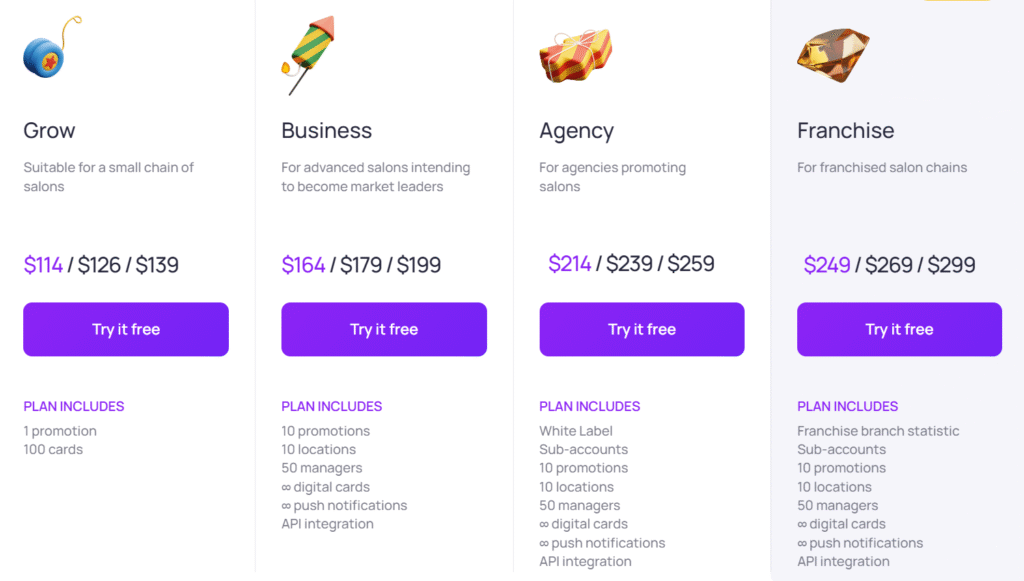
    • Grow Plan (Boomerang Pricing): Often positioned as an entry-level option, with some sources indicating a monthly cost around $114 / $126 / $139. This plan is typically suited for businesses just starting with loyalty programs.
    • Business Plan (Boomerang Pricing): Aimed at growing businesses, pricing for this plan has been cited around “$164 / $179” or a higher monthly rate of $199. It usually includes more advanced features to scale your loyalty efforts.
    • Agency Plan (Boomerang Pricing): Designed for agencies managing multiple client accounts, with reported prices ranging from “$214 / $239” to $259 per month. This plan offers robust tools for managing diverse loyalty campaigns.
    • Franchise Plan (Boomerang Pricing): Tailored for large enterprises and franchises, with pricing noted at a monthly cost of $249 / $269 / $299. This comprehensive plan supports extensive loyalty program management across multiple locations.

    Additional Pricing Considerations (Boomerang Pricing)

    Beyond the core plans, Boomerang may also offer pricing for specific features or add-ons, such as stamp cards, which have been mentioned with pricing variations like “$164 / $179 / $199” and “$214 / $239 / $259.” Some sources indicate a general monthly cost of $69 for Boomerang, with no free trial, freemium version, or setup fees.

    Important Note on Pricing Accuracy (Boomerang Pricing)

    It’s important to note that pricing information can change and may vary across different platforms or promotional periods. For the most accurate and up-to-date pricing details, it is always recommended to visit the official Boomerang website directly.

    For more detailed information, you can refer to the following source:

    By considering these various pricing tiers and options, businesses can effectively choose a Boomerang plan that aligns with their budget and loyalty program objectives.

  • Top 10 Best White Label Landing Page Builders Software In 2025

    Top 10 Best White Label Landing Page Builders Software In 2025

    white label landing page builder software

    Supercharge Your Agency: The Definitive Guide to White-Label Landing Page Builders in 2025 (Ranked & Compared) (White Label Landing Page Builder Software)

    As a seasoned digital marketer and agency owner, I understand the critical need for powerful, customizable landing pages that not only impress clients but also deliver tangible results. Over years of hands-on experience, I’ve rigorously tested and evaluated numerous landing page builders, and I’m here to share my insights on the top white-label options available in 2025.

    This in-depth guide will cut through the noise, saving you valuable time and resources, so you can focus on what truly matters: providing exceptional value and driving success for your clients.

    Landing page builders simplify creating optimized web pages for marketing campaigns without coding, offering:

    • Intuitive Interfaces: For rapid and agile page construction.
    • Pre-designed Templates: Streamline design for various goals.
    • A/B Testing: Optimize page elements for better results.
    • Flexibility & Customization: Tailor pages to client brands.

    White-label landing page builders allow rebranding and reselling the platform as your own, providing:

    • Unbranded Interface: Complete ownership of the user experience.
    • Custom Branding: Integrate your logo and brand elements.
    • Resellability: Offer branded landing page services.
    • Enhanced Credibility: Elevates your professional image.
    • Scalability: Manage multiple client projects seamlessly.

    Landing page builders are essential for effective marketing. White-label options empower agencies to offer branded solutions, enhancing credibility and scalability.

    The Top White-Label Landing Page Builders Software in 2025: My Expert Ranking

    Below is a consolidated overview of the white-label landing page builder software that have consistently impressed me:

    1. HighLevel (Overall Best) (White Label Landing Page Builder Software)
    white label landing page builder software

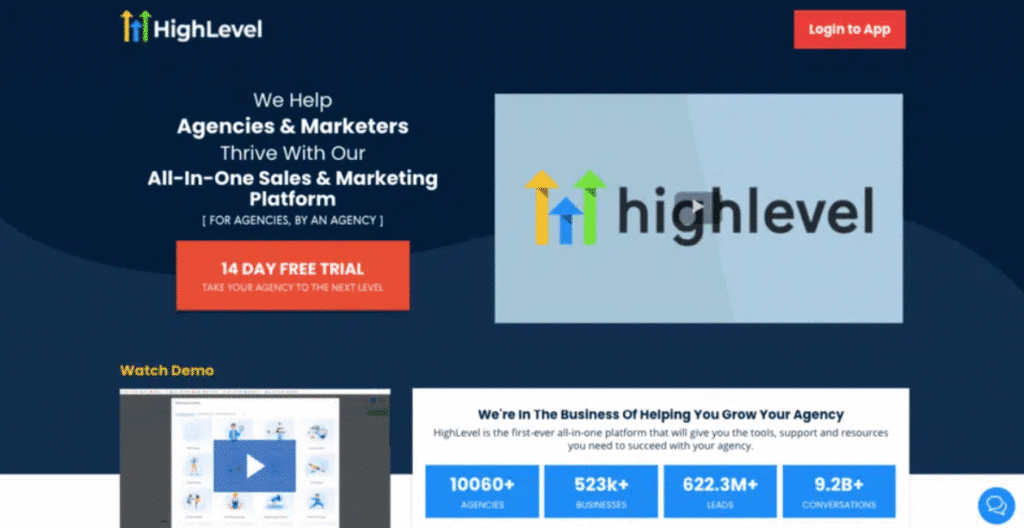
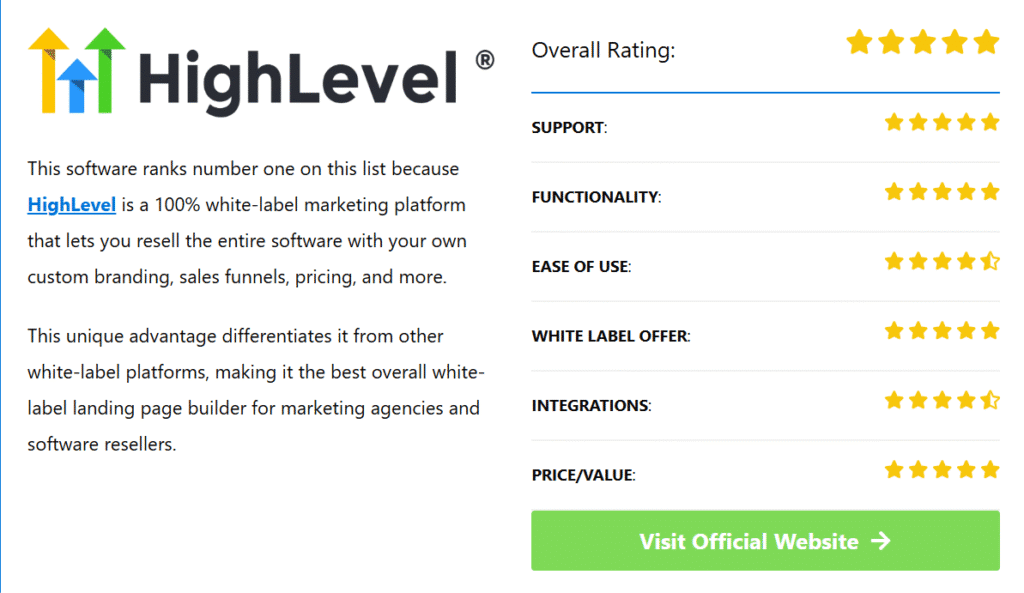
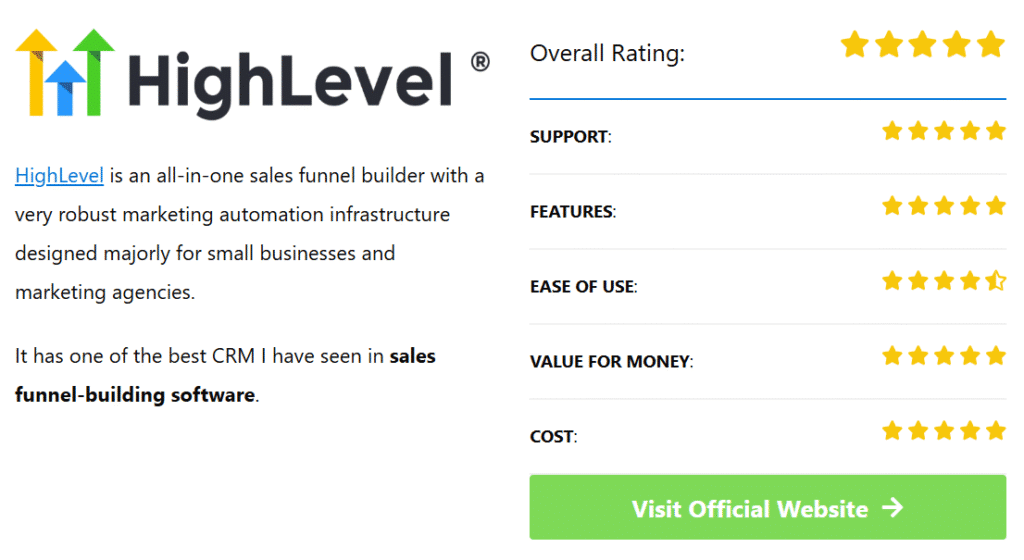
     The premier choice for marketing agencies and software resellers, offering a complete 100% white-label marketing platform encompassing landing page building, CRM, marketing automation, and more.

    HighLevel offers agencies a powerful white-label landing page builder and comprehensive marketing platform:

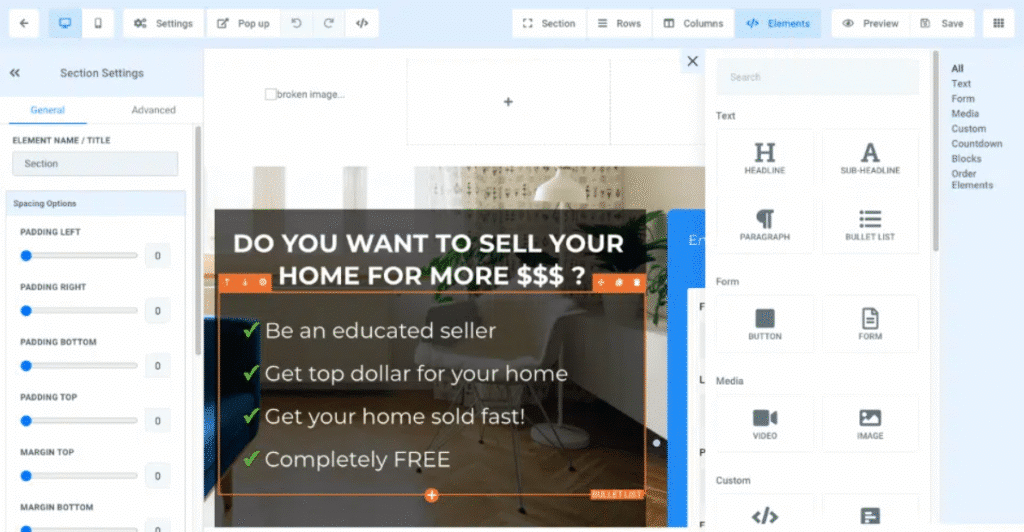
    • Rapid Creation: Intuitive builder for fast, high-converting landing pages.
    • Extensive Customization: Tailor pages with templates and branding.
    • Easy Drag-and-Drop: User-friendly design for all skill levels.
    • Conversion-Optimized: Templates designed for superior results.
    • Seamlessly Branded: Full white-labeling for a consistent client experience.
    • Scalable Growth: Handles multiple clients and projects effortlessly.
    • Centralized Management: Dashboard for all marketing campaigns.
    • Integrated CRM: Manage client interactions and leads.
    • Multichannel Marketing: Includes email, social media, and reputation management.

    HighLevel streamlines agency workflows, enhances client satisfaction with branded, high-converting landing pages, and offers a scalable platform with integrated CRM and multichannel marketing tools.

    white label landing page builder software
    GoHighLevel Pricing: Choose the Right Plan for Agency Growth (White Label Landing Page Builder Software)

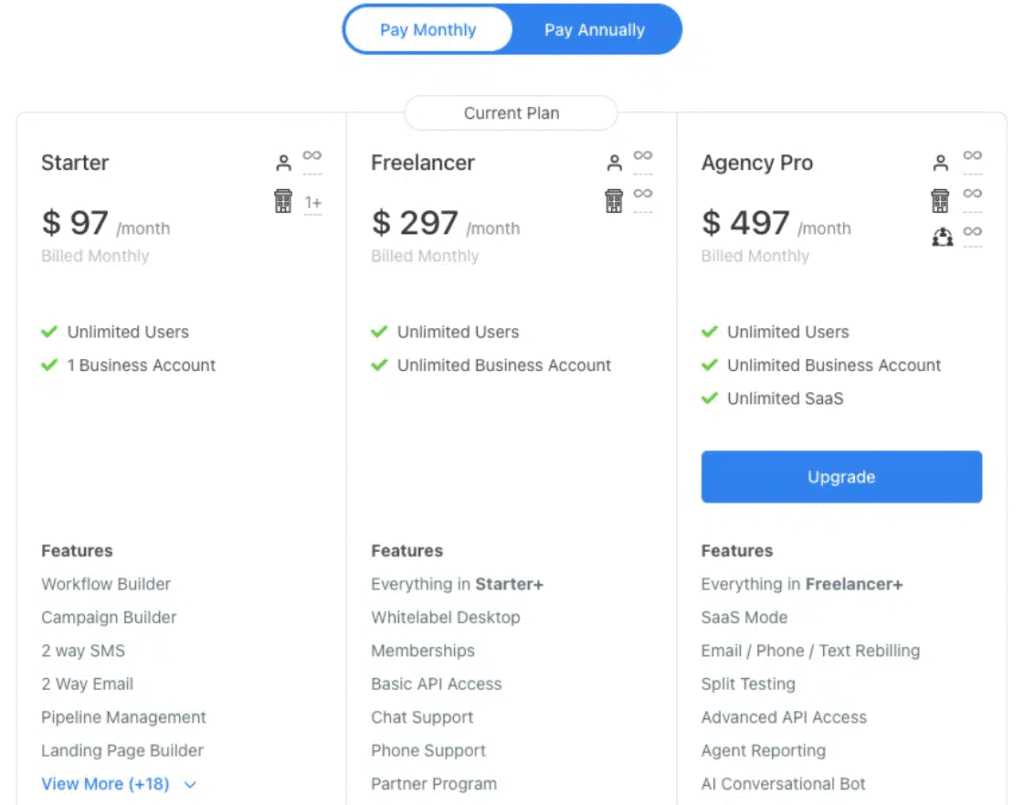
    GoHighLevel, a powerful white-label landing page builder and marketing automation platform, offers three main pricing tiers for agencies:

    • Agency Starter ($97/month): Ideal for new agencies, providing essential tools for client campaigns and branded landing pages.
    • Agency Unlimited ($297/month): Scalable option for growing agencies with more clients and expanded needs.
    • SaaS Agency Pro ($497/month): For agencies wanting full SaaS capabilities to resell the platform under their brand.
    white label landing page builder software

    New users can try any plan FREE for 14 days to assess the platform’s suitability for their agency’s specific needs and growth goals before committing. This allows for a risk-free evaluation of GoHighLevel’s robust features and potential impact on client success and operational efficiency. 

    white label landing page builder software
    1. Simvoly (Best for Agencies & Resellers): (White Label Landing Page Builder Software)
    white label landing page builder software

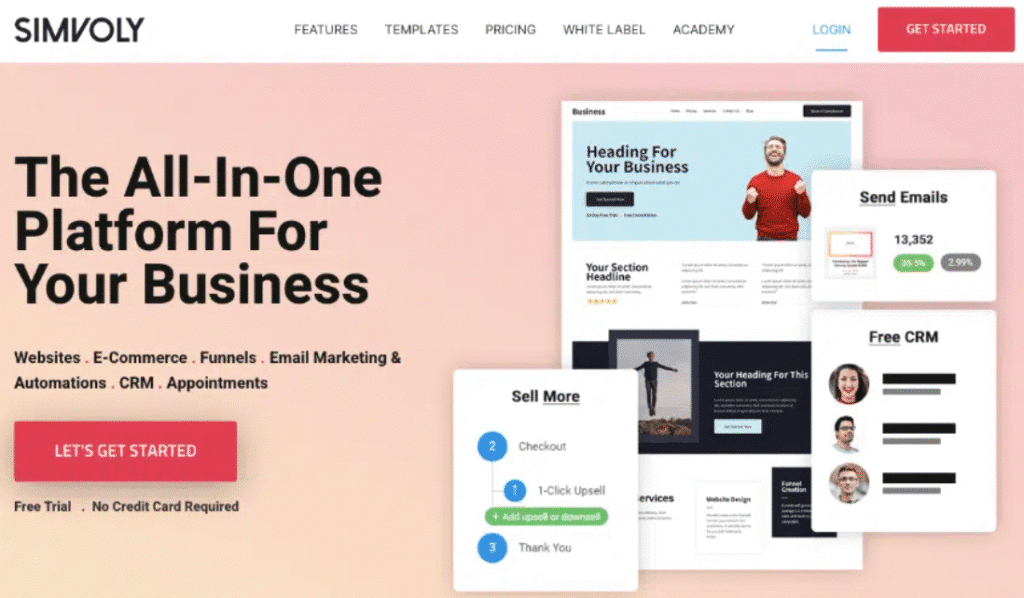
    An affordable yet powerful all-in-one white-label platform that can replace numerous marketing tools. Offers extensive customization, including branding and templates.

    Simvoly: Feature-Rich White-Label Platform for Agency Growth (White Label Landing Page Builder Software)

    Simvoly is a powerful white-label platform offering agencies a wide array of features beyond just landing pages:

    • Integrated E-commerce: Build online stores with “Add-to-Cart.”
    • Easy Drag-and-Drop Editor: Code-free page creation.
    • Sales Optimization: Custom landing pages, stores, checkouts, upsells, downsells, order bumps.
    • Extensive Templates: 30+ widgets, 200+ customizable, mobile-responsive blocks.
    • Full White-Labeling: 100% brand control and resell rights.
    • Website & Funnel Templates: Professionally designed options.
    • Email Marketing & Automation: Built-in campaign management.
    • Simple Membership Sites: Create and manage member areas.
    • Robust Analytics & A/B Testing: Track performance and optimize.
    • Powerful Affiliate Management: Manage affiliate programs.
    • White Label Academy: Comprehensive training resources.

    Simvoly provides a comprehensive, brandable platform empowering agencies to offer diverse online solutions, from e-commerce to membership sites, alongside effective landing page creation, all backed by extensive training resources.

    Simvoly White-Label Pricing: Scalable Plans for Your Branded Platform (White Label Landing Page Builder Software)

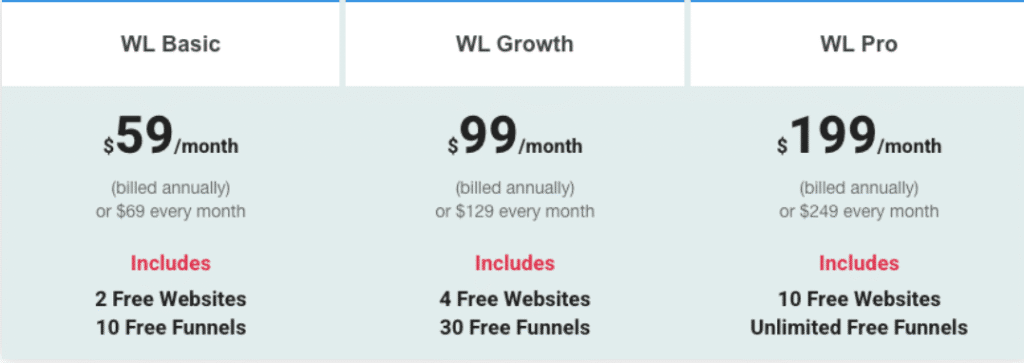
    Simvoly’s white-label pricing offers tiered plans designed for agencies to resell its website, funnel, and e-commerce building capabilities under their own brand:

    • WL Basic ($69/month): Entry-level plan for agencies starting with white-label services, including a base number of websites and funnels.
    • WL Growth ($129/month): Suited for expanding agencies, offering a higher allocation of websites and funnels for a growing client base.
    • WL Pro ($249/month): The top-tier plan for established agencies, providing the most resources, often including unlimited funnels, for maximum scalability.
    white label landing page builder software

    Beyond the base plan costs, Simvoly typically charges per additional project (website/funnel) managed under your white label. This flexible structure allows costs to scale with your client acquisition and usage. Review Simvoly’s official white-label pricing page for the most accurate and detailed information on included resources and per-project fees.

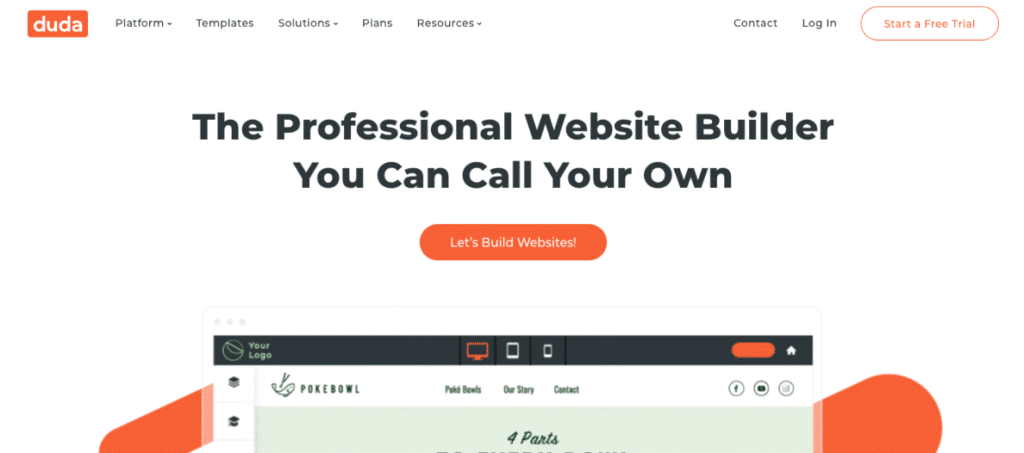
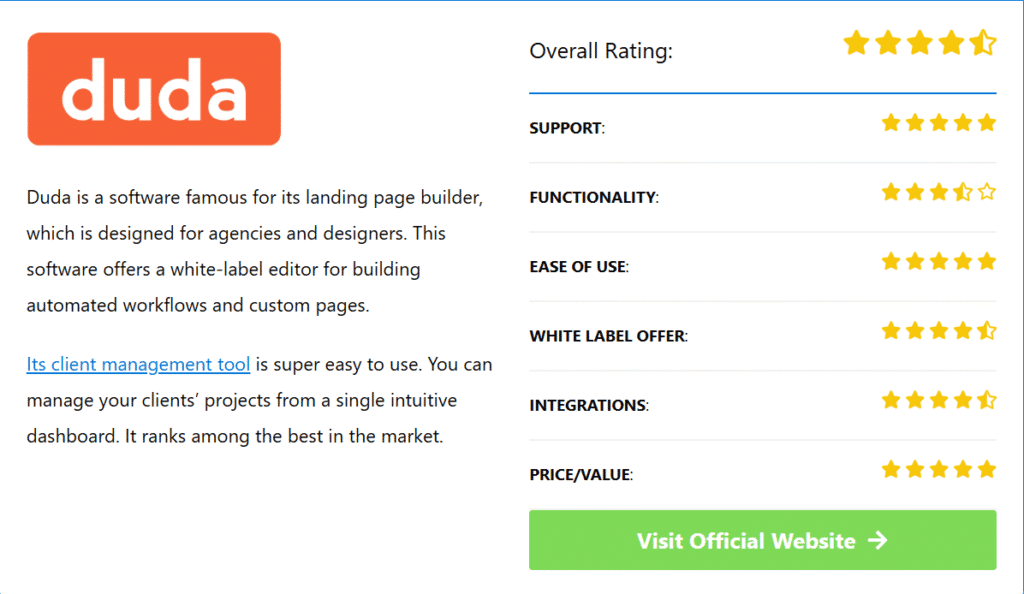
    1. Duda (Best for Client Management): (White Label Landing Page Builder Software)
    white label landing page builder software

    Renowned for its agency-focused features, including exceptional client management tools and strong performance metrics. White-label options available in higher-tier plans, starting from $39/month for Team plan with white-label client access.

    Duda’s White-Label Powerhouse: Features for Agency Success (White Label Landing Page Builder Software)

    Duda stands out as a robust white-label landing page builder packed with agency-focused features:

    • Intuitive Drag-and-Drop Editor & Templates: Effortless custom page creation with diverse, customizable templates.
    • Comprehensive White-Labeling: Full control over branding, custom domains, and client permissions for a seamless experience.
    • Extensive Payment Gateways: Over 80 options, including crypto, for global payment flexibility.
    • User-Friendly Interface: Easy navigation for both your team and clients.
    • Optimized Landing Page Templates: Wide selection designed for high conversions.
    • Reliable AWS Hosting: Ensures stable and performant landing pages.
    • Insightful Analytics: Track performance and conversion trends to optimize campaigns.
    • Excellent Client Management: Streamlined tools to manage multiple client projects efficiently.
    • Simplified Collaboration: Facilitates seamless communication with clients.
    • Vast Stock Image Library: Millions of free and premium images at your fingertips.
    • Duda University: Comprehensive learning resources to master the platform.

    Duda offers a user-friendly yet powerful white-label solution with strong client management, extensive customization, and reliable performance, making it ideal for agencies focused on delivering exceptional landing page experiences under their own brand.

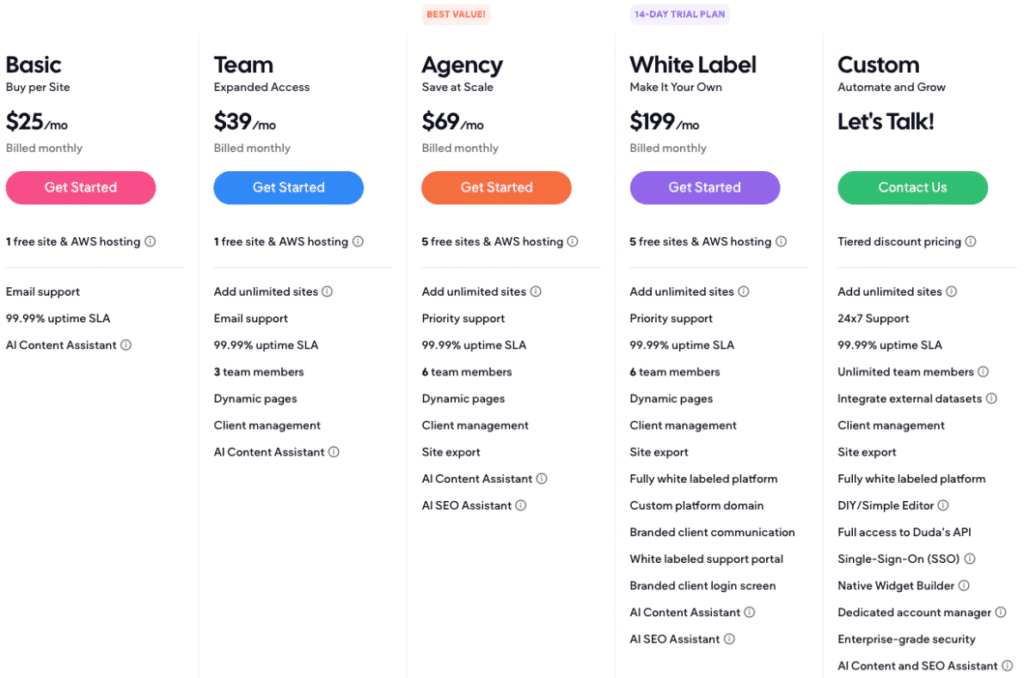
    Duda White-Label Pricing: Scalable Plans for Branded Services (White Label Landing Page Builder Software)

    Duda offers tiered pricing for its white-label platform, enabling agencies to provide branded website and landing page building services:

    • Basic ($25/month): Entry-level, suitable for single sites, lacks full white-label features.
    • Team ($39/month): Includes team collaboration, full white-label branding usually not included.
    • Agency ($69/month): Designed for agencies, offers enhanced client management, white-label customization may be limited.
    • White Label ($199/month): Specifically for full branding, includes comprehensive white-label client access.
    • Custom (Variable Pricing): Tailored for large agencies with unique needs and advanced white-label requirements.
    white label landing page builder software

    Duda offers a 14-day free trial upon subscribing to a paid plan. Full white-label capabilities, including custom branding and domains, are primarily available in the White Label plan. Lower-tier plans offer building features but with limited or no white-label options. Choose based on your branding needs and client volume.

    white label landing page builder software
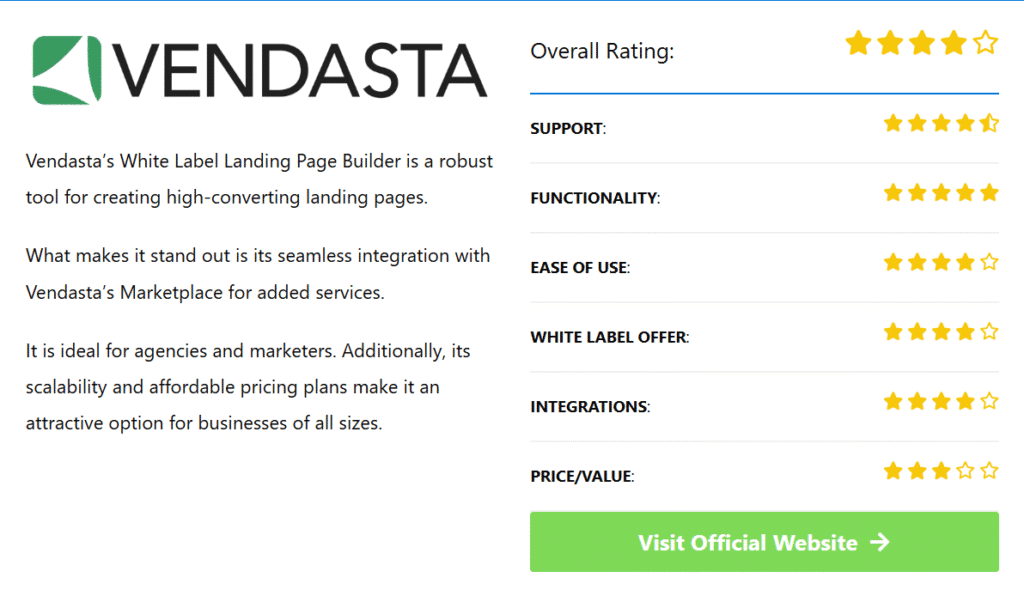
    1. Vendasta (Perfect for Agencies & Marketers):  (White Label Landing Page Builder Software)

    Seamlessly integrates with Vendasta’s Marketplace, offering a scalable platform with comprehensive marketing solutions alongside its white-label landing page builder

    white label landing page builder software

    Vendasta’s white-label platform empowers agencies with a comprehensive suite of tools:

    • Drag-and-Drop Builder: Easy, code-free landing page creation.
    • Full White-Labeling: Brand everything for a seamless client experience.
    • Customizable Assets: Tailor templates and themes to client branding.
    • Mobile-Responsive: Ensures optimal viewing on all devices.
    • Integrated CRM & Sales Pipeline: Streamline internal processes and client management.
    • Marketing Automation: Automate lead nurturing and campaign management.
    • Lead Tracking & Analytics: Monitor performance and optimize campaigns.
    white label landing page builder software

    Vendasta offers a holistic, brandable platform extending beyond landing pages, integrating CRM, marketing automation, and a marketplace of resellable services for comprehensive client solutions.

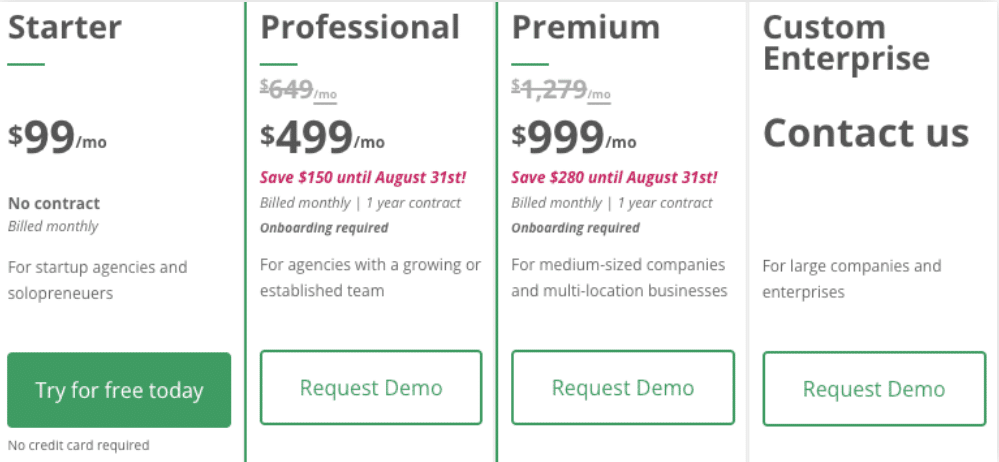
    Vendasta’s pricing scales with agency needs, offering a 14-day free trial.

    • Starter ($99/month): Entry-level for basic client management and campaigns.
    • Professional ($499/month): For growing agencies with more clients and services.
    • Premium ($799/month): For established agencies with high volume and complex needs.
    • Custom (Contact Sales): Tailored pricing for enterprise-level requirements.
    white label landing page builder software

    Vendasta’s plans vary by user count, lead generation capacity, and campaign limits. The free trial allows agencies to assess the best fit before committing.

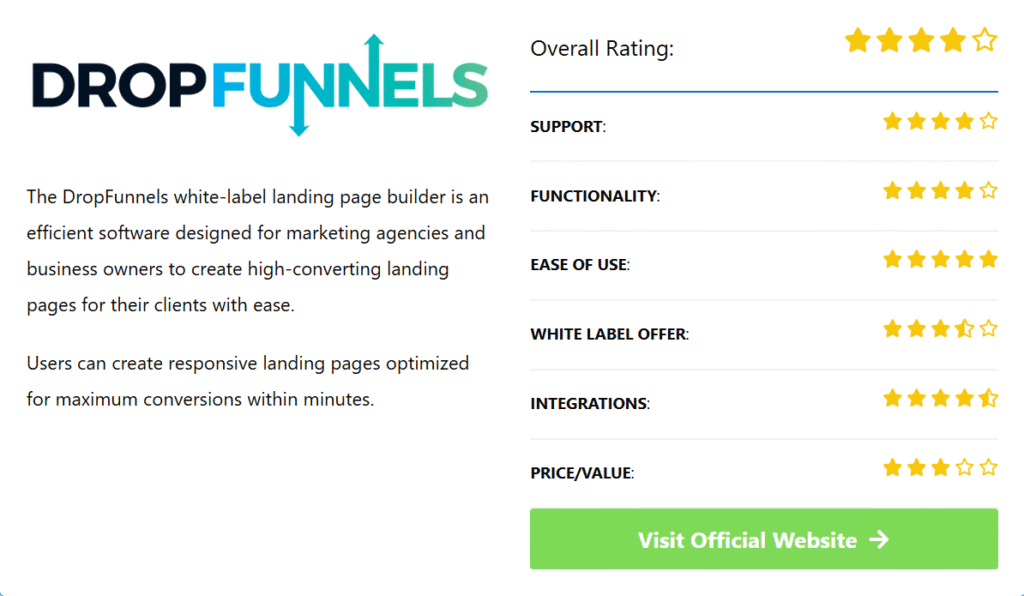
    1. DropFunnels (Designed for Marketing Agencies & Business Owners): (White Label Landing Page Builder Software)

    A builder emphasizing speed and ease of use for creating high-converting landing pages. Offers white-label capabilities

    white label landing page builder software

    DropFunnels offers agencies a streamlined white-label platform focused on effective marketing:

    • Drag-and-Drop Builder: User-friendly, code-free page creation.
    • White-Label Ready: Brandable platform for a seamless client experience.
    • Customizable Templates: Over 100 options for diverse campaigns.
    • Mobile-Responsive: Ensures optimal viewing on all devices.
    • Key Integrations: Connects with popular CRM and email tools.
    • Built-in Systems: Includes affiliate, membership, course, and blog builders.
    white label landing page builder software

    DropFunnels provides an easy-to-use, customizable, and affordable white-label solution with essential marketing tools integrated, though with limited direct integration options beyond Stripe and PayPal.

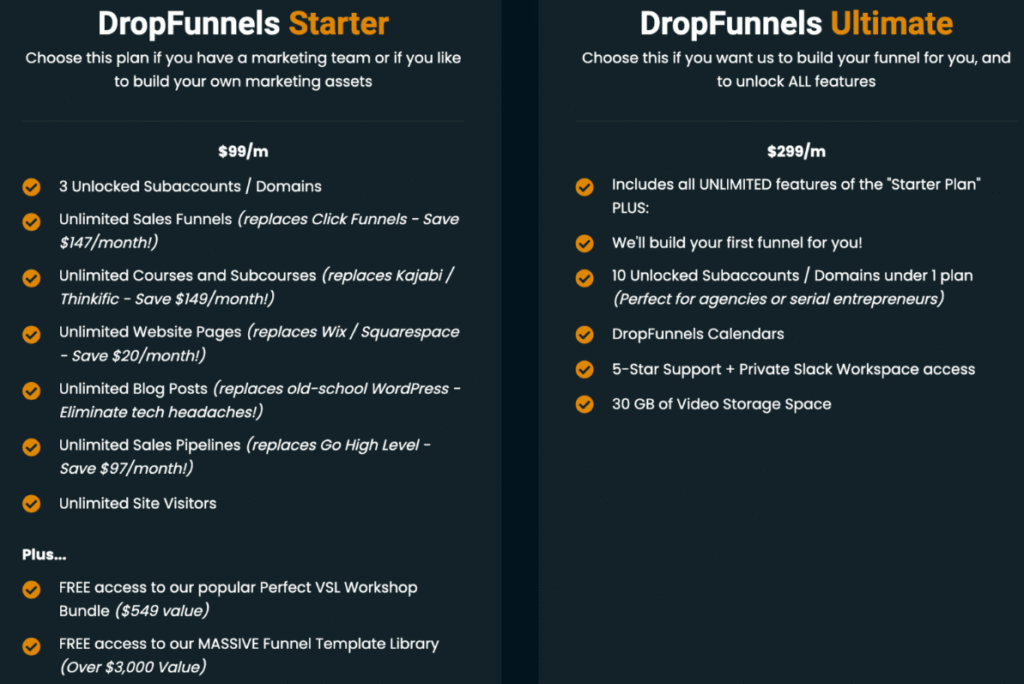
    DropFunnels offers two straightforward pricing plans for agencies: (White Label Landing Page Builder Software)

    • Starter Plan ($99/month): Comprehensive features for agencies beginning to use the platform.
    • Ultimate Plan ($299/month): Enhanced features and scalability for larger agencies.
    white label landing page builder software

    New users can try the Starter Plan free for 14 days to evaluate its capabilities before committing to a paid subscription. Choose based on your agency size and required features.

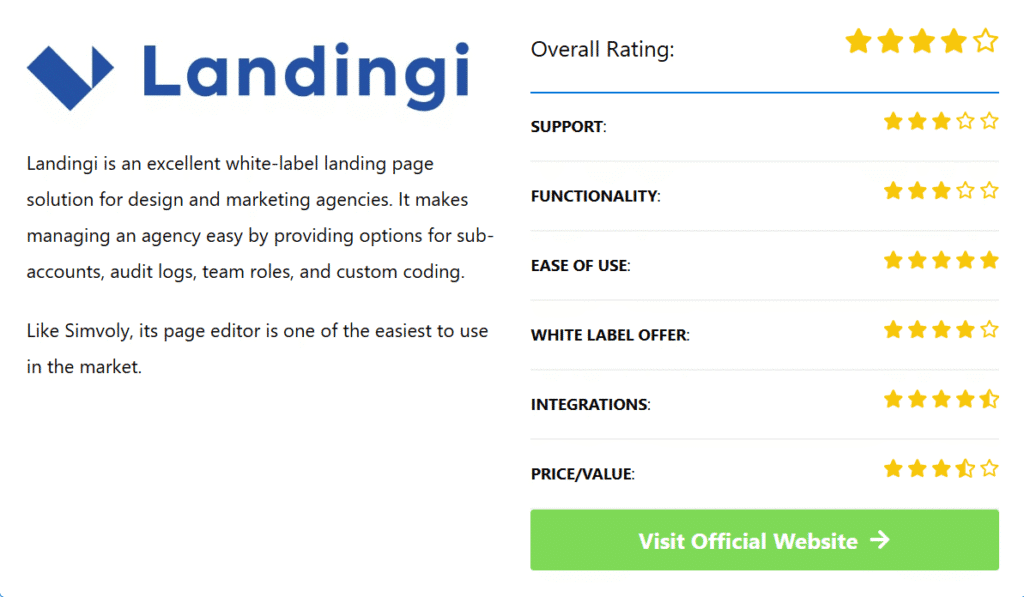
    1. Landingi (Best for Design & Marketing Agencies): (White Label Landing Page Builder Software)
    white label landing page builder software

    Known for its user-friendly editor and extensive template library, offering robust features for agencies, including sub-accounts and team roles.

    Landingi offers a robust platform for agencies focused on landing pages and pop-ups:

    • Easy Drag-and-Drop Editor: With autosave for seamless creation.
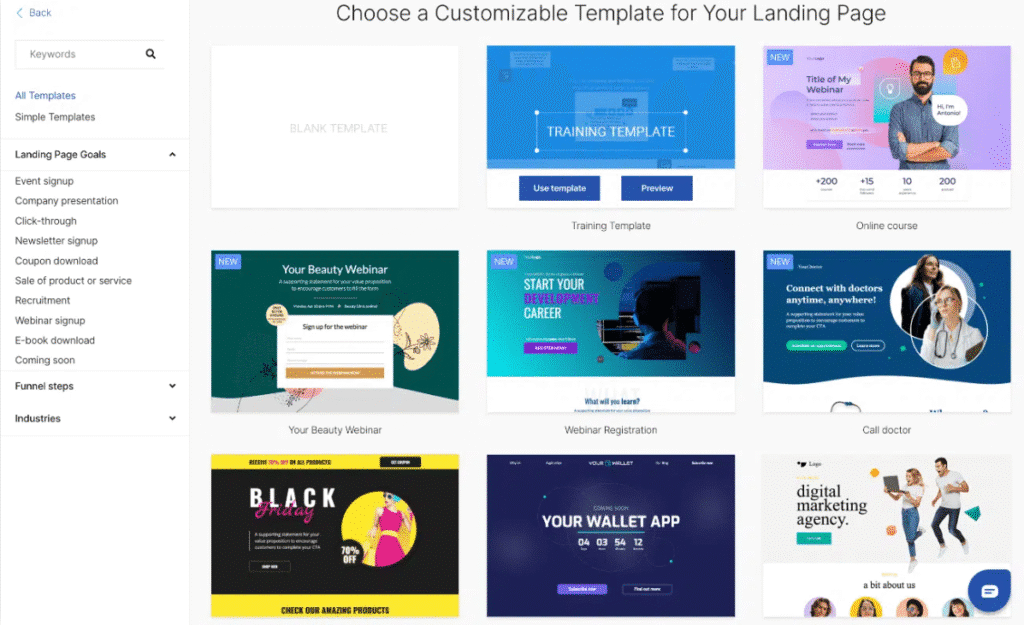
    • Extensive Templates: Over 150 pre-built options for landing pages and pop-ups.
    • Fast Self-Hosted Platform: Ensures quick loading speeds on desktop.
    • Web Personalization: Display tailored content to different visitors.
    • Audit Logs: Monitor page changes for better team management.
    • Wide Integrations: Connects with popular email and marketing tools.
    • Built-In Analytics: Track landing page performance directly.
    • Sales Funnel Connection: Integrate landing pages into broader funnels.
    • Communication Tools: Includes calls, voice drops, and call tracking.
    white label landing page builder software

    Landingi provides a user-friendly platform with a vast template library and strong integration capabilities, ideal for agencies prioritizing effective landing page and pop-up creation, despite some limitations in customization and responsive design automation.

    Landingi’s pricing offers a flexible structure for various users:

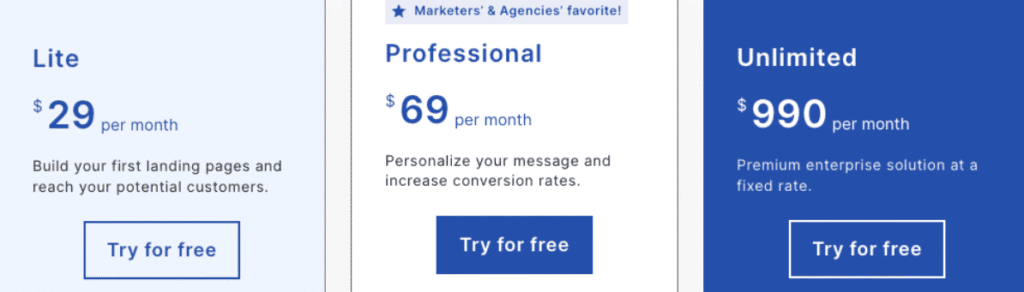
    • Free Plan ($0/month): Unlimited landing pages, test all features.
    • Lite Plan ($29/month): Expanded features beyond the free tier.
    • Pro Plan ($69/month): Advanced features for established marketers/agencies.
    • Unlimited Plan ($990/month): Maximum scalability for high-volume users.
    white label landing page builder software

    Landingi provides a valuable free plan to explore all features, with scalable paid options (Lite, Pro, Unlimited) offering increasing capabilities for growing marketing needs.

    1. ActiveCampaign (Best White-Label CRM Software with Landing Pages): (White Label Landing Page Builder Software)

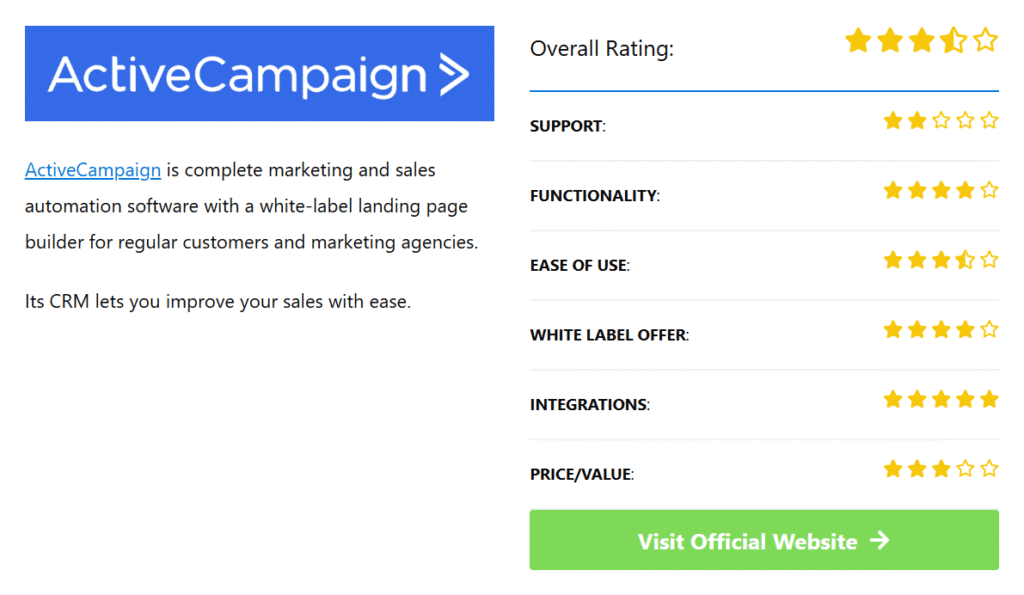
    A comprehensive marketing and sales automation platform with white-label CRM and a functional landing page builder. White-labeling available on the Enterprise plan, pricing varies.

    white label landing page builder software

    ActiveCampaign offers a powerful marketing and sales automation platform with a functional landing page builder:

    • Workflow Builder: Create seamless marketing automation sequences.
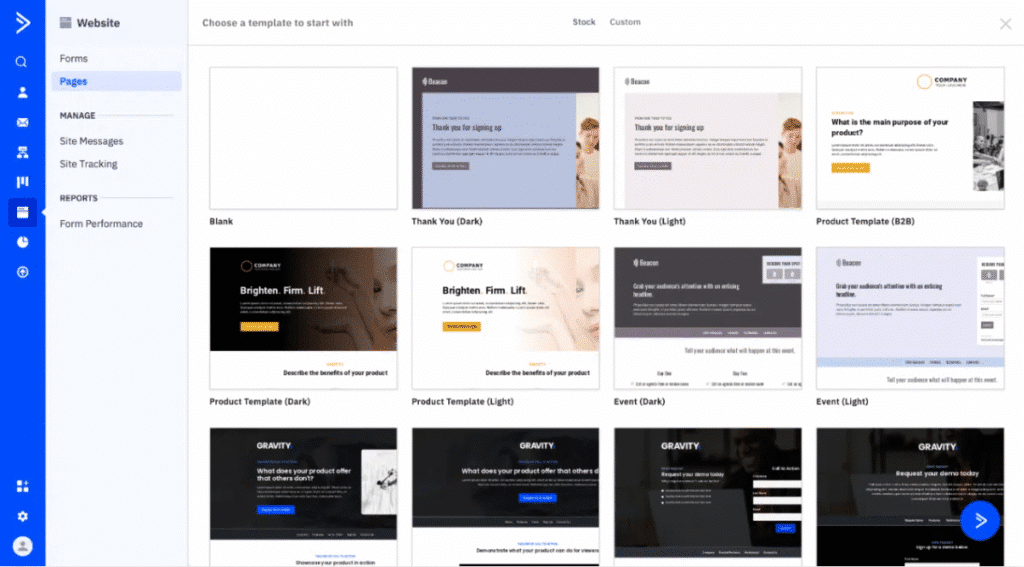
    • Basic Landing Page Builder: Functional for lead capture within the platform.
    • Responsive Templates: Over 55 modern and customizable options.
    • Web Chat: Engage with landing page visitors in real-time.
    • Advanced Email/SMS Automation: Sophisticated segmentation, personalization, A/B testing, unlimited sends.
    • Comprehensive Analytics: Track landing page and campaign performance.
    • Extensive Integrations: Connects with 870+ tools and payment gateways.

    ActiveCampaign excels in its robust marketing automation features, seamlessly integrated with a functional landing page builder, making it ideal for agencies prioritizing unified marketing workflows and extensive integrations.

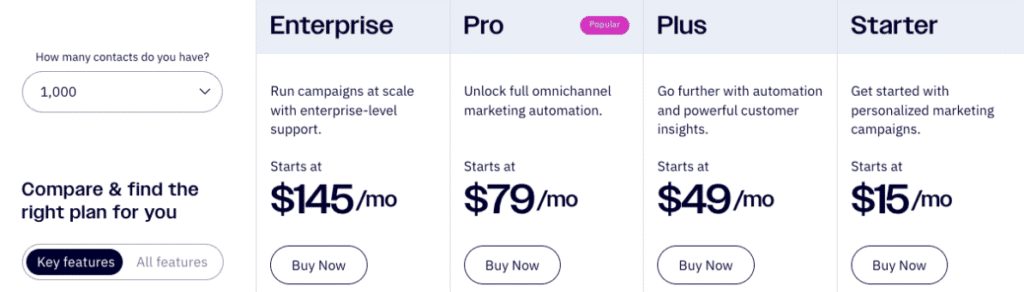
    ActiveCampaign’s pricing scales by contact count, offering a 14-day free trial. For 1000 contacts:

    • Lite ($15/month): Basic email marketing and automation.
    • Plus ($49/month): Adds CRM and lead scoring.
    • Professional ($79/month): Includes advanced automation and features.
    • Enterprise ($145/month): Comprehensive features with full white labeling.
    white label landing page builder software

    While lower tiers lack white labeling, the Enterprise plan provides it, making it suitable for agencies. Costs increase with contact volume.

    white label landing page builder software
    1. Weblium (Best for Freelancers & Small Businesses): (White Label Landing Page Builder Software)

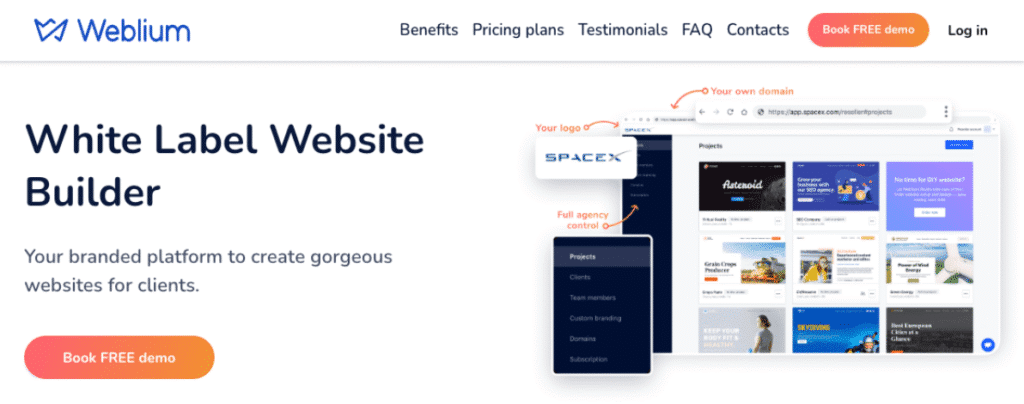
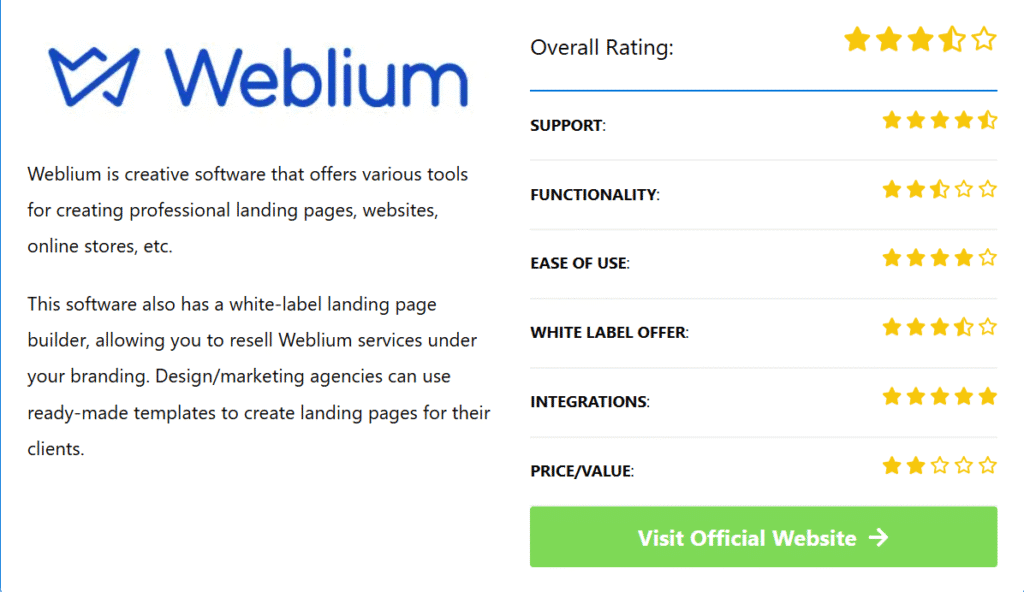
    Offers a simple and fast website and landing page builder with white-label options for reselling services.

    white label landing page builder software

    Weblium is a user-friendly platform for website and landing page creation with extensive integrations:

    • Wide Integrations: Connects with major marketing and payment tools.
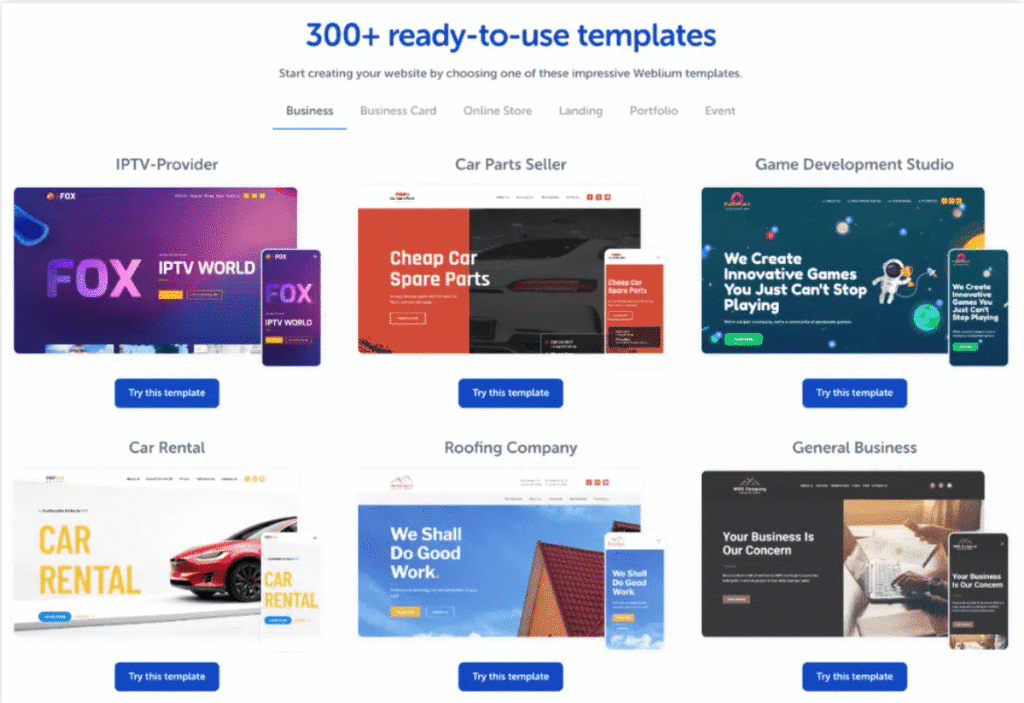
    • Vast Templates: Over 300 customizable website templates.
    • Flexible Editor: Drag-and-drop with 250+ pre-built blocks.
    • Pop-Up Builder: Customizable for lead capture.
    • Advanced SEO Tools: Enhance website visibility.
    • Simple CRM: Basic lead management.
    • E-commerce: Create online stores with payment processing.
    • Unlimited Resources: File storage and page creation.
    • Client Management: Add clients as project contributors.
    white label landing page builder software

    Weblium offers a simple, code-free way to build websites and landing pages with a strong focus on integrations and a large template library, making it suitable for various users including freelancers and small businesses, despite limitations in exporting and e-commerce features.

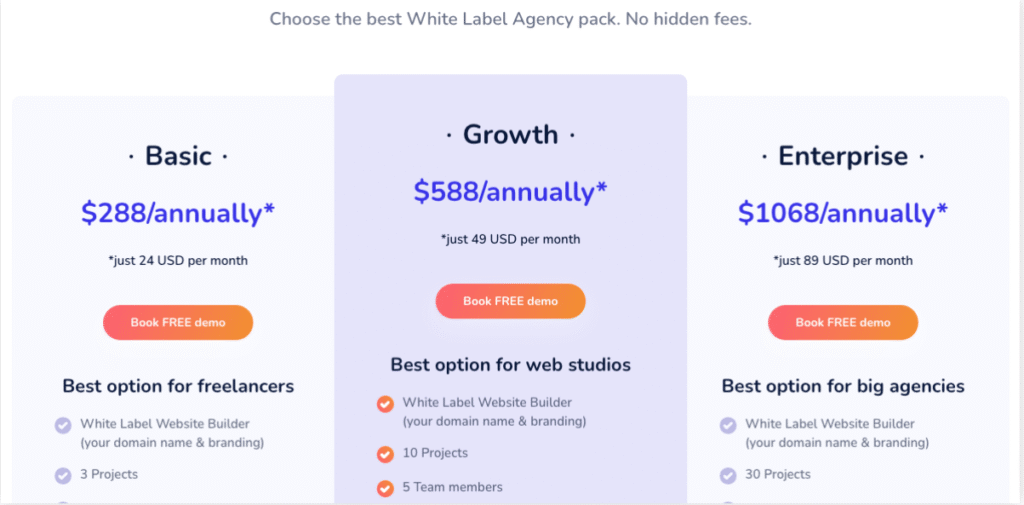
    Weblium’s pricing offers a Forever Free Plan and a 14-day free trial. For white-label solutions (billed annually):

    • Basic ($288/year): Entry-level branding for clients.
    • Growth ($588/year): Scalable for growing client bases.
    • Enterprise ($1068/year): Comprehensive features for larger operations.
    white label landing page builder software

    Weblium provides a free entry point for testing. Its annual white-label plans offer increasing client management and branding capabilities for agencies.

    white label landing page builder software
    1. Convrrt (Best for SaaS Providers): (White Label Landing Page Builder Software)
    white label landing page builder software
    white label landing page builder software

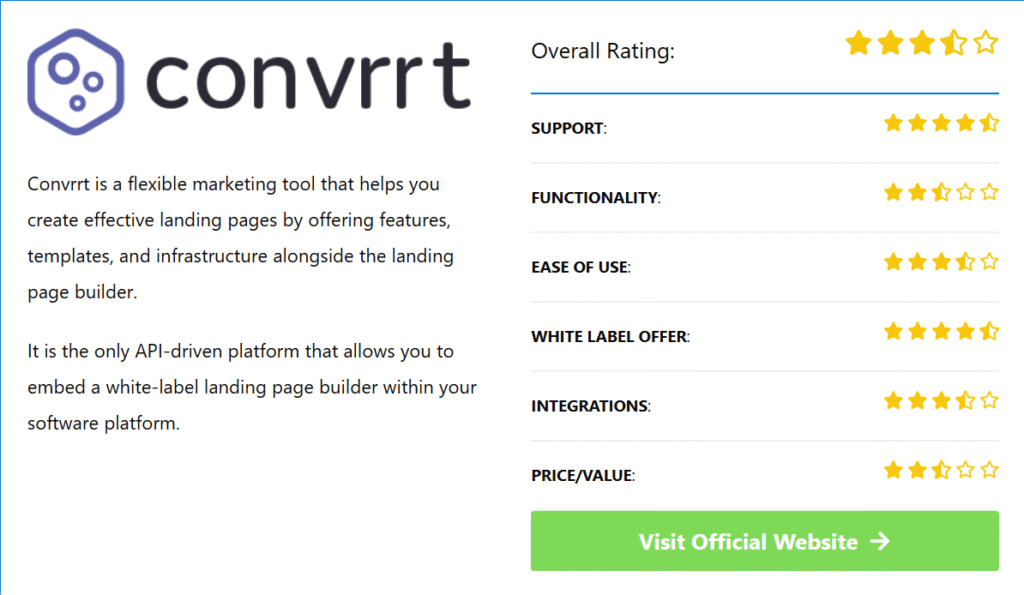
    An API-driven platform allowing for embedding a white-label landing page builder directly within other software platforms. Custom pricing, inquire with support.

    Convrrt is a unique white-label landing page builder focused on seamless integration:

    • SaaS/Marketing Tool Integration: Integrates effortlessly with other platforms.
    • Simple Drag-and-Drop Builder: Customizable elements for any design.
    • 100% White-Label: Ideal for large corporations, SaaS, and resellers.
    • Built-in SEO Tools: Creates SEO-optimized landing pages.
    • Responsive Templates: Pre-made designs that work on all devices.
    • Integrated E-commerce: Turn landing pages into checkout pages.
    white label landing page builder software

    Convrrt stands out for its API-driven integration capabilities and full white-label offering, making it a strong choice for embedding landing page functionality within other SaaS platforms or for large-scale resellers, despite some complexity in the editor and basic e-commerce features.

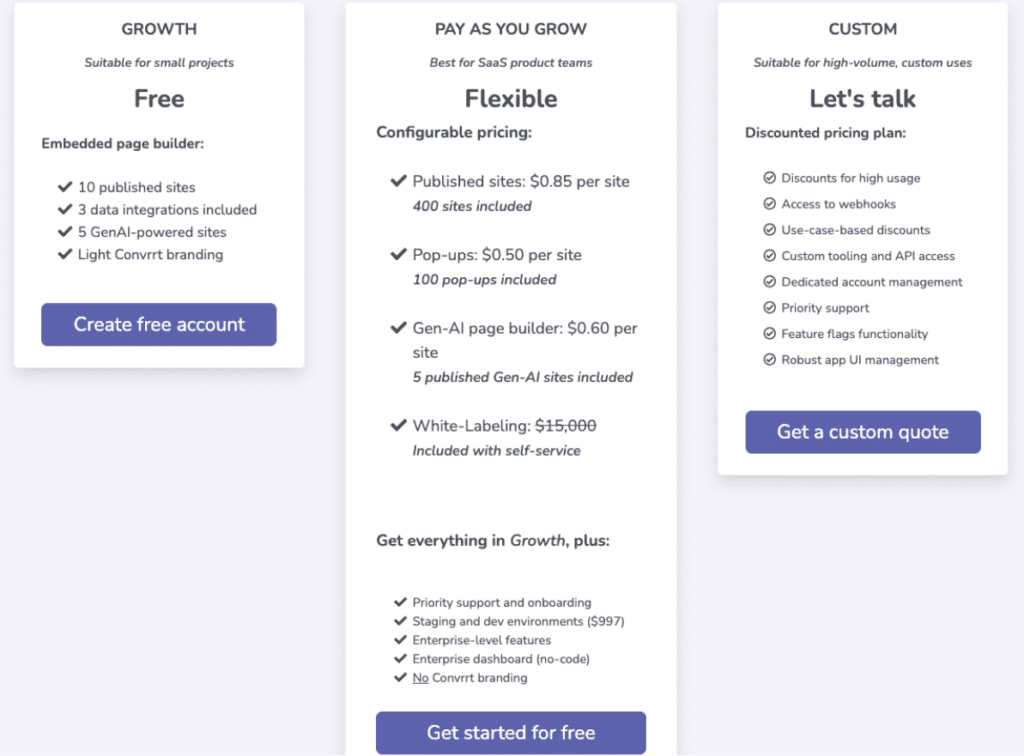
    Convrrt’s pricing offers three tiers:

    • Free Plan: Basic features for limited use.
    • Flexible Plan: Full feature access with customizable pricing based on needs and support.
    • Custom Plan: Advanced tools and multi-account options with custom enterprise pricing.
    white label landing page builder software

    Convrrt’s pricing scales from a free entry point to flexible and custom options for growing needs, with the Flexible and Custom plans requiring direct contact for specific pricing based on features and support levels.

    1. Ucraft (Good, but Pricey): (White Label Landing Page Builder Software)
    white label landing page builder software

    Offers various web-building tools, including a white-label landing page builder, but is noted for its higher cost compared to competitors.

    Ucraft offers an integrated platform for website and landing page creation:

    • Logo Maker: Create and customize logos.
    • No-Code Editor: Drag-and-drop with custom blocks and animations.
    • E-commerce: Accept payments and manage shipping.
    • Blogging Platform: Full-featured content creation.
    • Built-in SEO: Optimize for search engines.
    • Integrated CMS: Manage website and content.
    • Hosting & Domain: Included for easy setup.
    white label landing page builder software

    Ucraft is user-friendly with a free plan and 24/7 support, great for portfolios and basic online presence, but lacks advanced marketing tools and has a pricier white-label offering.

    Ucraft’s white-label pricing offers tiered annual plans:

    • Agency ($599/year for 100 websites): For agencies managing multiple client sites.
    • Partner ($1999/year for 500 websites): For larger agencies with extensive client portfolios.
    • Enterprise (Custom Pricing): Tailored for large-scale needs.
    white label landing page builder software

    Ucraft’s white-label plans are based on website volume and billed annually, offering scalable solutions for agencies. A 14-day free trial (no credit card needed) is available to test the platform.

    Final Thoughts: Choosing the Right White-Label Partner (White Label Landing Page Builder Software)

    Selecting the optimal white-label landing page builder for your business hinges on a careful evaluation of your specific needs and budget. Thankfully, many of these platforms offer a suite of complementary tools alongside their core page-building functionality.

    Ultimately, the ideal white-label landing page builder will be the one that seamlessly aligns with your business objectives, empowers you to serve your clients efficiently, and provides a robust foundation for your agency’s growth. By leveraging the insights shared in this guide and exploring the unique strengths of each platform, you can confidently choose a partner that will drive your agency’s success in 2025 and beyond.

  • 10 Best Sales Funnel Builders Software & Funnel Builders To Use In 2025

    10 Best Sales Funnel Builders Software & Funnel Builders To Use In 2025

    Best Sales Funnel builders software

    Supercharge Your Business with the Right Sales Funnel Software: A Comprehensive 2025 Guide (Best Sales Funnel Builders Software)

    In today’s competitive digital landscape, a well-defined sales funnel is no longer a luxury – it’s a necessity for business survival and growth. Sales funnel software empowers businesses of all sizes to create automated and streamlined pathways that guide potential customers through the buying journey, ultimately converting them into loyal clients. This comprehensive guide merges insights on sales funnel software and the burgeoning realm of white-label funnel builders to help you make informed decisions and optimize your sales process in 2025.

    Understanding the Power of Sales Funnel Software (Best Sales Funnel Builders Software)

    Sales funnel software provides the tools to visualize, automate, and optimize your customer acquisition process. It allows you to build effective online systems that:

    • Attract Leads: Capture the attention of potential customers through targeted landing pages, engaging content, and strategic outreach.
    • Nurture Leads: Build relationships and provide value through automated email sequences, personalized communication, and targeted content delivery.
    • Convert Leads: Guide prospects through a seamless sales process, utilizing compelling offers, streamlined checkout pages, and persuasive sales copy.
    • Collect Payments: Integrate secure payment gateways to facilitate smooth and efficient transactions for your products or services.

    By implementing sales funnel software, businesses can experience significant benefits, including increased lead generation, improved conversion rates, enhanced customer engagement, better understanding of customer behavior, and the ability to make data-driven decisions to optimize their marketing and sales strategies. Key features like order bumps, upsells, and downsells further contribute to maximizing average order value (AOV) and overall revenue.

    Why Consider White-Label Funnel Builder Software? (Best Sales Funnel Builders Software)

    For marketing agencies, software resellers, and even established businesses looking to expand their service offerings, white-label funnel builder software presents a unique and powerful opportunity. White-labeling allows you to rebrand and resell a fully functional sales funnel software platform as your own, under your own brand name and logo.

    Benefits of White-Label Funnel Builders:

    • Brand Authority: Offer a sophisticated and valuable service under your own brand, strengthening your brand identity and building trust with your clients.
    • Recurring Revenue: Generate consistent monthly income by offering the software as a subscription service to your clients.
    • Increased Customer Value: Provide a comprehensive suite of marketing tools, making your agency or business a one-stop shop for your clients’ needs.
    • Higher Profit Margins: Set your own pricing and retain 100% of the profits from your white-labeled software.
    • Customization and Control: Tailor the platform to align with your brand aesthetics and potentially integrate it with your existing service offerings.
    • Reduced Development Costs: Avoid the significant investment and time required to build a proprietary software platform from scratch.

    Top Sales Funnel Software and White-Label Options in 2025 (Best Sales Funnel Builders Software)

    Here’s an updated and merged list of some of the best sales funnel builders, highlighting both general-purpose platforms and those offering white-label capabilities:

    Overall Top Performers:

    1. GoHighLevel: Remains a top contender, offering an all-in-one marketing platform with robust sales funnel building, CRM, email marketing, appointment scheduling, and comprehensive white-label options. Starting Price: $97/month.
    Best Sales Funnel Builders Software

    Visit Gohighlevel Official website here!

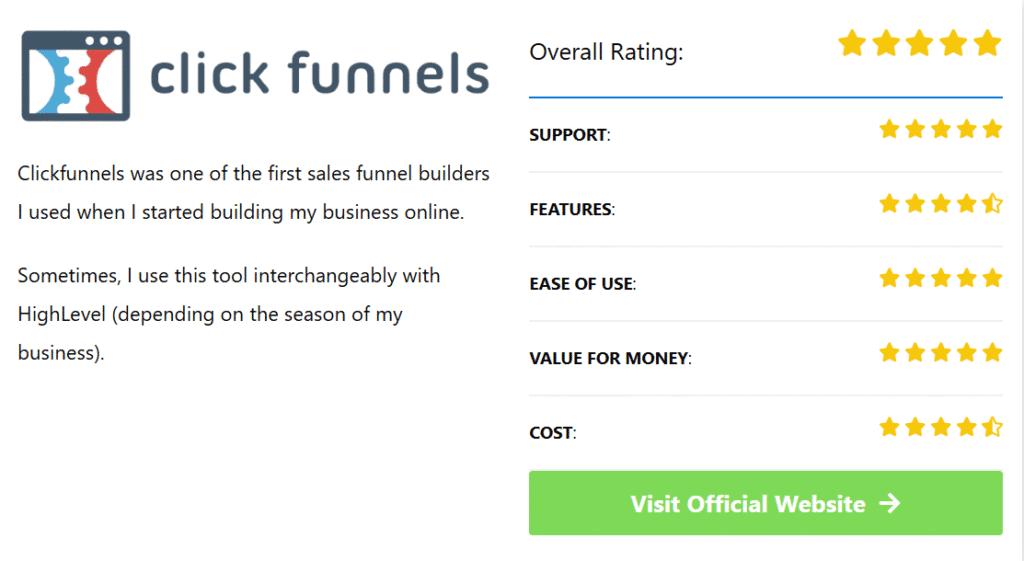
    1. ClickFunnels: Continues to be a highly popular and widely used platform known for its user-friendly interface and extensive template library. While primarily a funnel builder, it offers affiliate management. Starting Price: $97/month.
    Best Sales Funnel Builders Software

    Visit Click Funnels Official website here!

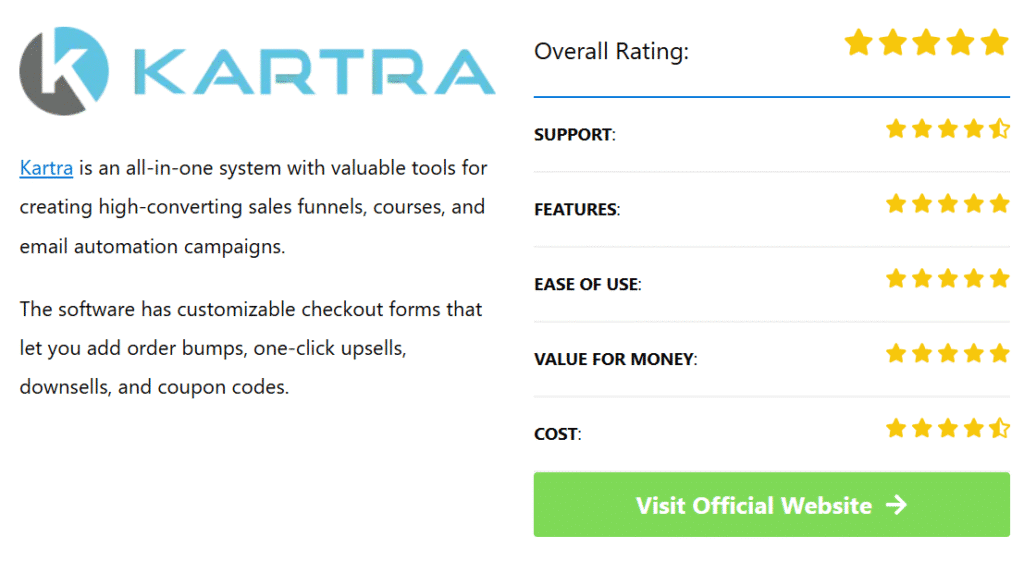
    1. Kartra: Excels in building high-converting landing pages and automated email marketing campaigns, offering a complete marketing suite with affiliate management and membership site features. Starting Price: $119/month.
    Best Sales Funnel Builders Software

    Visit Kartra Official website here!

    Best Free & Affordable Options:

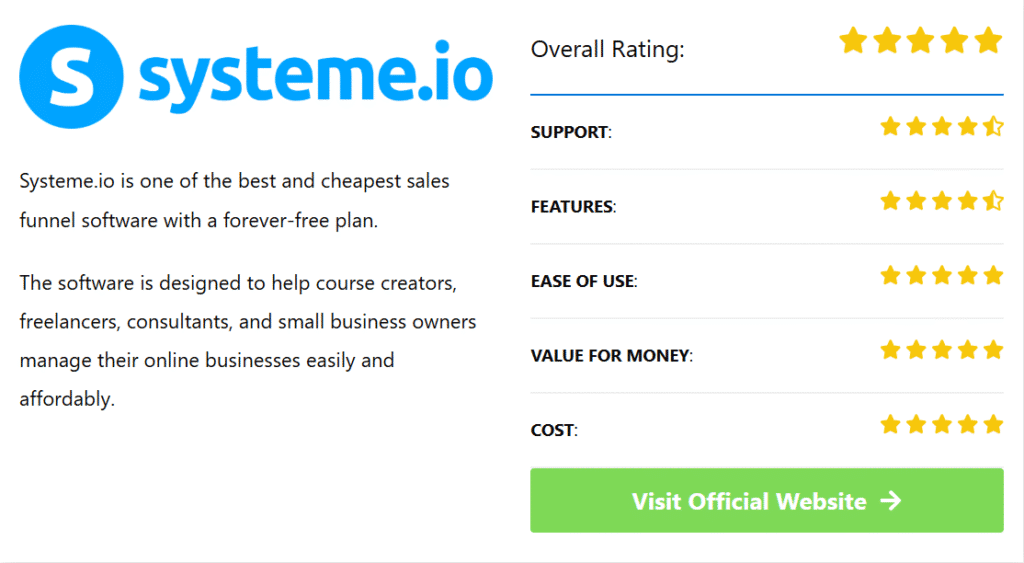
    1. Systeme.io: Stands out as the best FREE sales funnel builder with a generous free plan and affordable paid options, offering a comprehensive set of marketing tools. Starting Price: $0/month.
    Best Sales Funnel Builders Software

    Visit Systeme.IO Official website here!

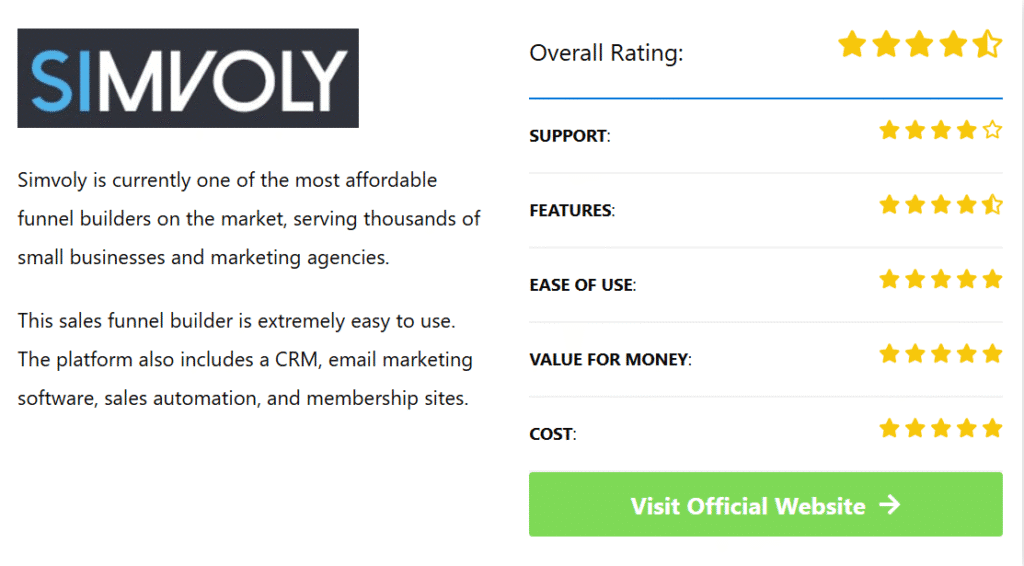
    1. Simvoly: Offers the cheapest white-label funnel builder option, along with website building, e-commerce features, and email marketing automation. Starting Price: $12/month.
    Best Sales Funnel Builders Software

    Visit Simvoly Official website here!

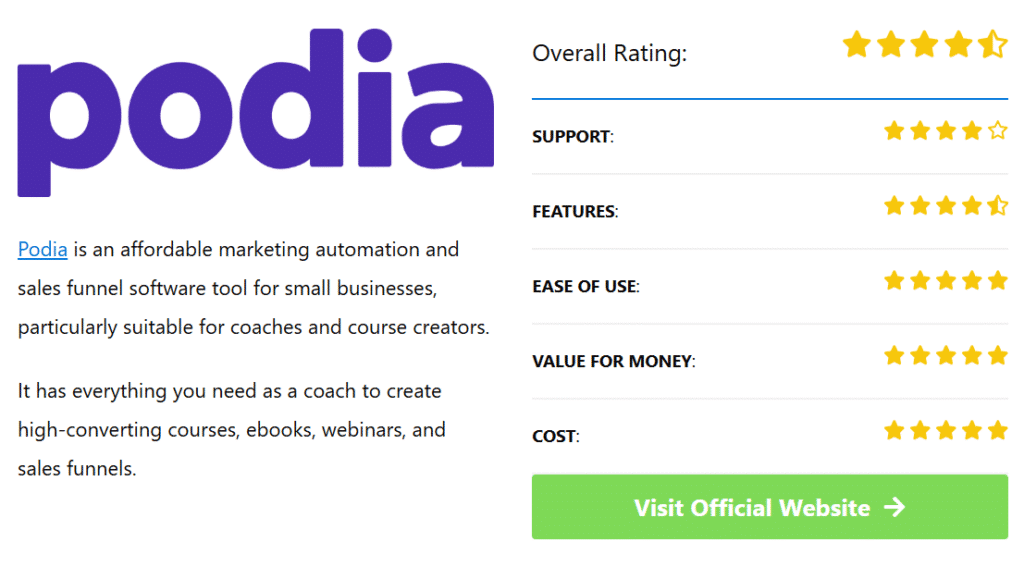
    1. Podia: An excellent and affordable choice for course creators and digital product sellers, with a helpful free plan and integrated membership site and email marketing features. Starting Price: $4/month.
    Best Sales Funnel Builders Software

    Visit Podia Official website here!

    Strong Contenders with Specific Strengths:

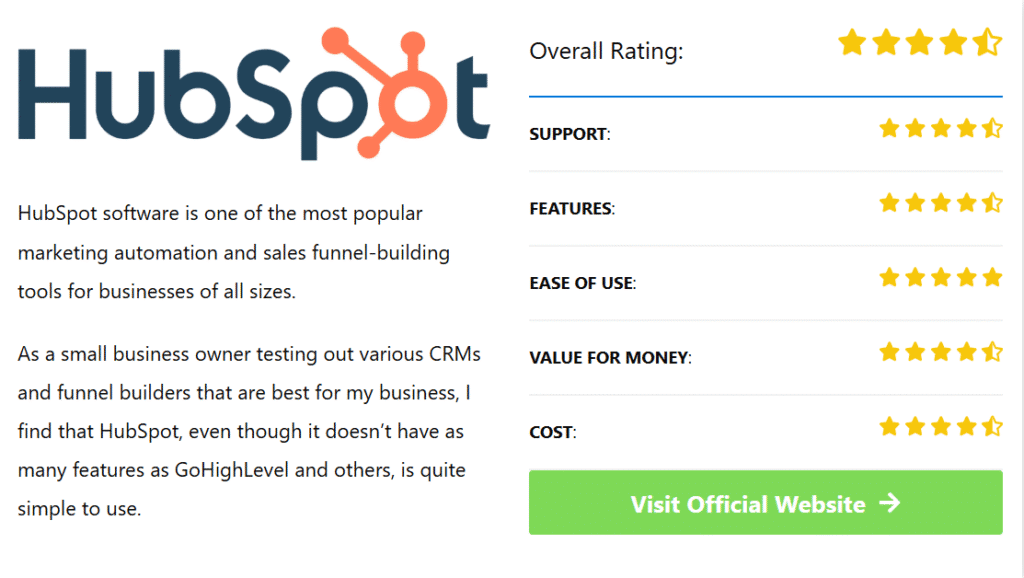
    1. HubSpot: A powerful inbound marketing and sales platform with a robust CRM, extensive marketing automation capabilities, and strong integration options. While not solely a funnel builder, its marketing hub is comprehensive. Sales Hub Pricing starts at $90/month.
    Best Sales Funnel Builders Software

    Visit Hubspot Official website here!

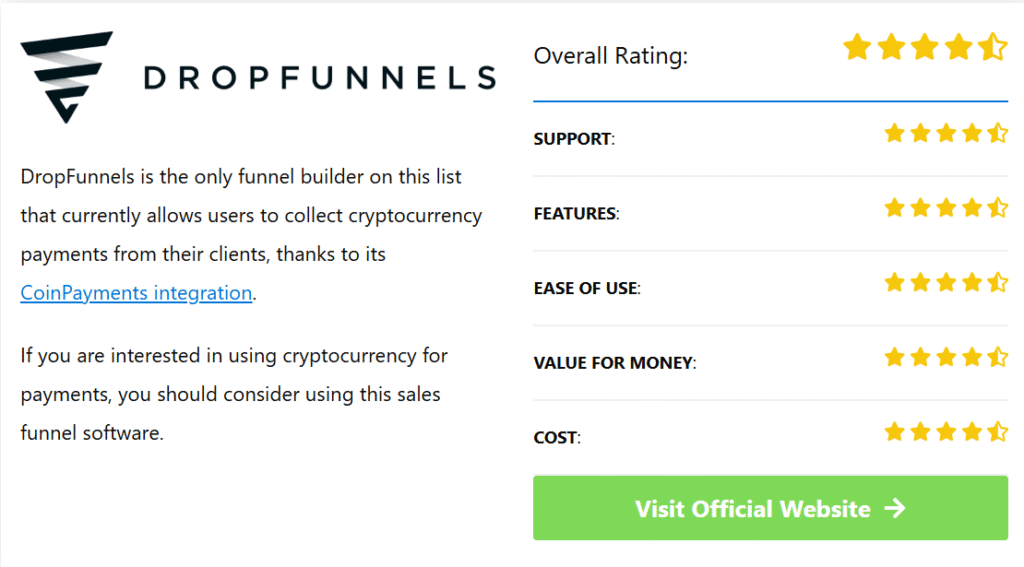
    1. DropFunnels: Emphasizes fast-loading pages and seamless integration with WordPress, making it a strong option for WordPress-centric businesses. Starting Price: $49/month.
    Best Sales Funnel Builders Software

    Visit Dropfunnels Official website here!

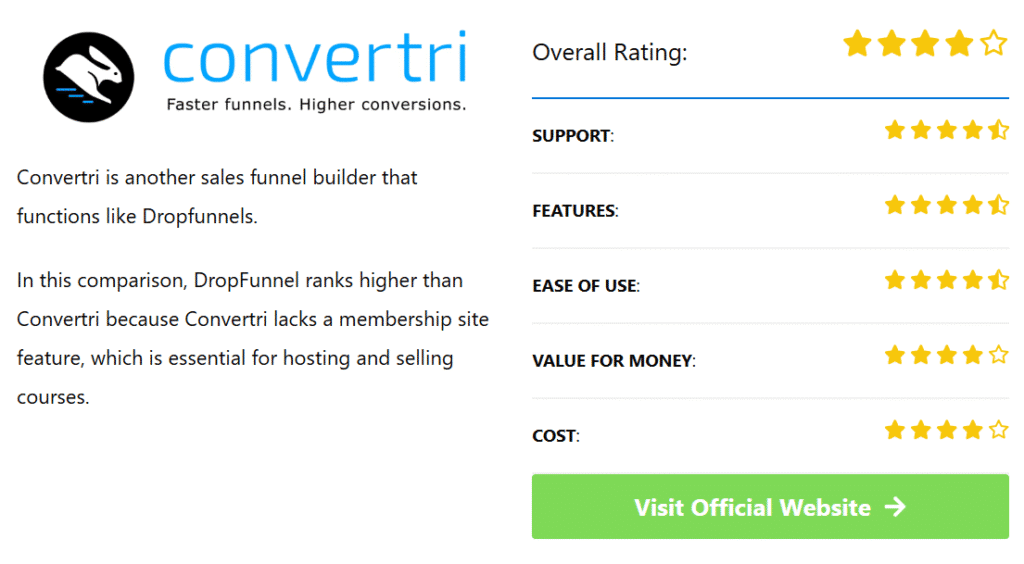
    1. Convertri: Renowned for its lightning-fast page loading speeds and flexible drag-and-drop builder, focusing on high-conversion funnels and landing pages. Starting Price: $99/month.
    Best Sales Funnel Builders Software

    Visit Convertri Official website here!

    1. ThriveCart: Unique for its one-time lifetime payment option and robust sales tax collection functionality, making it a cost-effective long-term solution, primarily focused on checkout and sales pages. One-time Price: $495.
    Best Sales Funnel Builders Software

    Visit ThriveCart Official website here!

    Key Features to Consider in Sales Funnel Software (Best Sales Funnel Builders Software)

    When selecting the right sales funnel software for your business, consider these essential features:

    • Ease of Use: Intuitive interface and drag-and-drop builders are crucial for efficient funnel creation.
    • Reliability and Efficiency: The platform should be stable and perform consistently.
    • Pre-built Templates: High-converting templates can significantly speed up the funnel building process.
    • Conversion-Optimized Checkout: Features like order bumps, upsells, and downsells are vital for maximizing revenue.
    • A/B Split Testing: Essential for optimizing your funnels and landing pages for maximum performance.
    • Email Marketing Integration: Seamless integration with email marketing platforms or built-in email automation features.
    • Membership Site Functionality: Important for businesses offering online courses or membership programs.
    • Affiliate Management: A valuable tool for expanding your reach through affiliate marketing.
    • Payment Gateway Integrations: Compatibility with various payment processors for smooth transactions.
    • Affordable Pricing Plans: Choose a plan that aligns with your budget and business needs.
    • Reliable Customer Support: Access to timely and helpful support is crucial.
    • White-Label Options (if applicable): Consider the customization and branding capabilities if you plan to resell the software.

    Final Verdict: Choosing the Right Funnel Builder for Your Success (Best Sales Funnel Builders Software)

    Selecting the best sales funnel software depends heavily on your specific business needs, budget, and technical expertise.

    • For an all-in-one solution with robust white-labeling, GoHighLevel remains a top recommendation.
    • ClickFunnels is a strong choice for its user-friendliness and extensive community.
    • Kartra excels in integrated marketing automation features.
    • Systeme.io offers an unbeatable entry point with its free plan.
    • For agencies seeking the cheapest white-label option, Simvoly is worth considering.
    • ThriveCart‘s lifetime deal can be highly cost-effective in the long run for businesses focused on sales pages.

    By carefully evaluating your requirements and comparing the features and pricing of these leading sales funnel software and white-label funnel builder platforms, you can equip your business with the tools necessary to attract, nurture, and convert leads effectively in 2025 and beyond. Remember to leverage free trials whenever possible to experience the platforms firsthand before making a commitment.

  • Intriguing Top Outsourcing Statistics You Shouldn’t Ignore in 2025

    Intriguing Top Outsourcing Statistics You Shouldn’t Ignore in 2025

    Outsourcing Statististics

    Businesses sometimes ask other companies to do some of their work. This is called outsourcing. It’s like asking a friend to help you with a chore! Businesses do this to save money and get things done faster and better. Many companies do it, from big computer companies to small new businesses.

    This story will discuss the number of companies using outsourcing and what’s happening with it. We’ll look at some cool numbers and facts that might surprise you!

    If you like learning about how businesses work or are just curious about jobs and the future, you’ll find out some neat things about how outsourcing changes the world.

    Outsourcing Statistics: Here are some cool facts about companies asking other companies for help (outsourcing statistics):

    • Lots of companies (74 out of 100) ask for outside help to check their own work because they don’t have enough people who know how to do it.
    • Almost all (92 out of 100!) of the biggest companies ask others to help them with their computers and technology.
    • Almost everyone (93 out of 100!) who asked for help was happy with the outcome!
    • In the US, companies will spend almost $200 billion on computer and technology help from other companies this year—that’s a lot of money!
    • More and more companies are asking for help paying their employees.
    • Companies are also asking for help with legal stuff. This market is growing super fast!
    • Small businesses often).
    • A country called China is the place where most companies go to get help making things and with computer stuff.
    • More than half of them ask for help keeping their computers safe from bad guys (cybersecurity).
    • Some companies don’t ask for help because they lack money.

    General Outsourcing Statistics

    Here are some more facts about companies asking other companies for help (outsourcing):

    Outsourcing Statististics
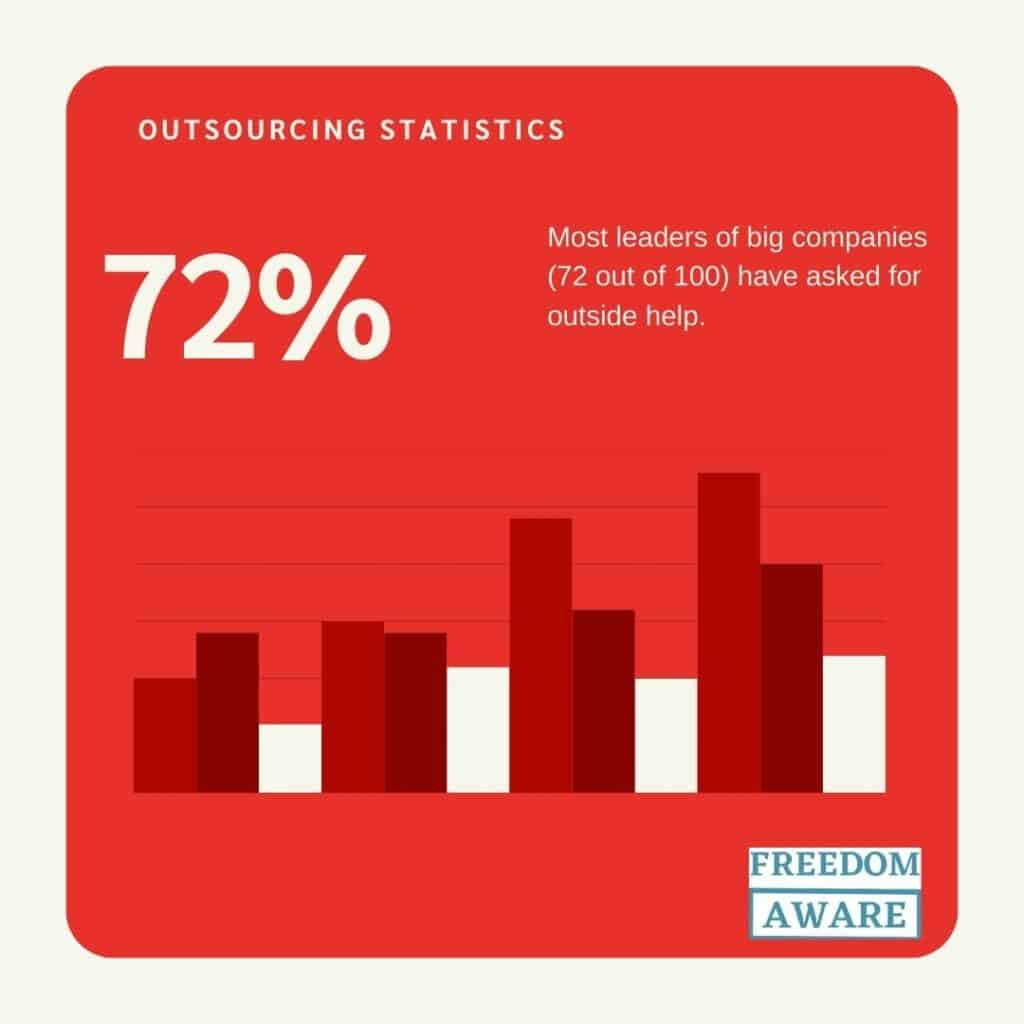
    1. Most leaders of big companies (72 out of 100) have asked for outside help. Almost half of them asked for help with money, counting, and computers. (source)
    2. Lots of companies (more than 40 out of 100) that don’t ask for help now are thinking about it for next year. (source)
    3. Lots of companies (61 out of 100) ask for help with money, things, and other business tasks. (source)
    4. In the UK, almost half of the companies (46 out of 100) asked for help with advertising this year. (source)
    5. In Poland, nearly all companies (84 out of 100!) asked for help keeping their computer data safe. (source)
    6. In the US, most companies that clean buildings don’t ask for outside help. They wanted to do it themselves. (source)
    7. Lots of companies (74 out of 100) ask for outside help to check their work because they don’t have enough people who know how. (source)
    8. Most companies will use a mix of doing things themselves and asking for outside help for things like hiring people (HR). (source)
    9. Most small businesses (83 out of 100) planned to keep asking for help or even ask for more help this year. (source)
    10. Almost all of the biggest companies (92 out of 100) ask for help with their computers. (source)
    11. Almost half of the companies in the UK (48 out of 100) asked for help this year. This is more than before! (source)
    12. Some companies in the UK (28 out of 100) ask for help with advertising online, and some of those (10 out of those 28) ask for help specifically with advertising on social media. (source)

    Here are some more facts about why companies ask for outside help (outsourcing) and how much they spend:

    Why Companies Outsource (Outsourcing Statistics):

    Outsourcing Statististics
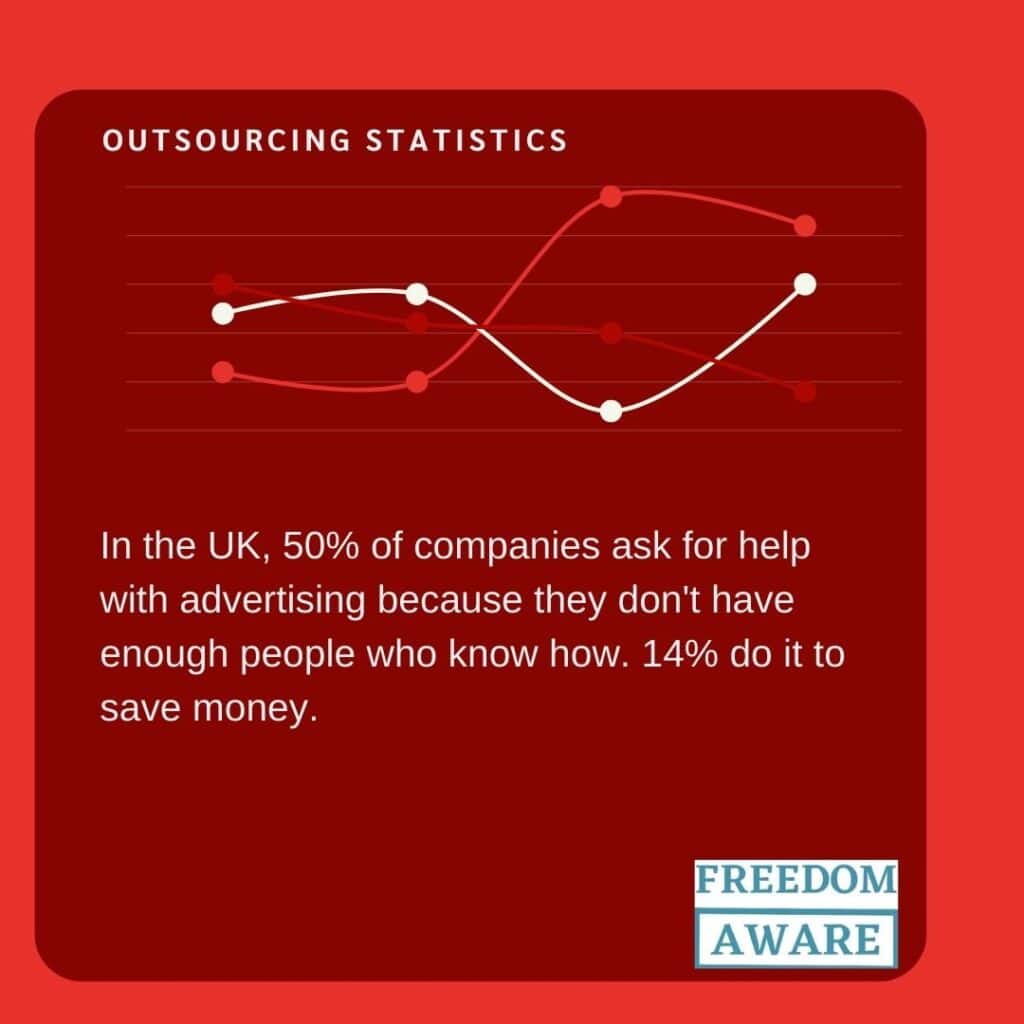
    1. In the UK, many companies (50 out of 100) ask for help with advertising because they don’t have enough people who know how. Some (14 out of 100) do it to save money. (source)
    2. Almost everyone (93 out of 100) who asked for help was happy with how it turned out! (source)
    3. Lots of companies (71 out of 100) like asking for help with counting money because it gives them more wiggle room and lets them change things easily. (source)
    4. Many leaders who handle money (78 out of 100) say that asking for outside help lets their teams focus on more important things. (source)

    How Much Money is Spent on Outsourcing (Outsourcing Statistics):

    1. In the US, companies will spend more and more money on getting help with selling things. (source)
    2. All over the world, companies spend a huge amount of money on asking other companies to do different tasks. This number keeps growing! Most of the money is spent on helping customers and on computers. (source)
    3. Companies around the world will spend a ton of money on getting help with computers this year, and that amount will keep growing. (source)
    4. In the US alone, companies will spend a lot of money on getting help with computers this year, and that amount will also keep growing. (source)
    5. Companies are also spending more money on getting help with buying things they need. (source)
    6. In Canada, companies will spend a lot more money on getting help with computers in the next few years. (source)
    7. Companies are spending more money on getting help with putting information into computers. (source)
    8. Companies are spending a lot more money on getting help with looking at data to find important information. (source)
    9. Companies are spending more money on getting help with managing their papers and documents. (source)
    10. Many of those companies that need help with documents are in Europe. (source)
    11. Companies are spending more money on getting help with their big computer rooms (data centers). (source)
    12. Even governments are spending more money on asking outside companies to help with things like healthcare, schools, and transportation. (source)

    (Outsourcing Statistics): Here are even more facts about companies and governments asking for outside help (outsourcing statistics), 

    Governments ask for outside help for two main reasons: to save money (sometimes up to 20%!) and to make sure they’re doing a good job for everyone.

    Here are some more specific examples:

    Outsourcing Statististics
    1. Companies are asking for more help with keeping track of their customers (CRM). This is because they have lots of customers, need to understand information about them, and want to save money. (source)
    2. Companies are also asking for help with their computers at work (desktops). They need help with things like fixing problems and keeping the software up-to-date. (source)
    3. More companies are asking for help with paying their employees. Lots of this is happening in North America. (source)
    4. Companies are asking for help with their help desks – the people you call when you have a problem with your computer or something else at work. (source)
    5. Hospitals and doctors are asking for help with sending bills to patients. (source)
    6. Companies that make video games are asking for help with things like drawing characters, making animations, and programming the game. (source)
    7. Companies are asking for help with legal things. This is growing very fast! (source)
    8. Companies are asking for help with their call centers – the places where people answer the phone when you call a company. (source)
    9. Companies in the US are asking for a lot more help with engineering – building things like bridges and machines. (source)
    10. Companies are asking for help with things like hiring people and managing their employees (HR). Much of this is happening in North America. (source)
    11. Companies are also asking for help with finding new people to hire. (source)
    12. Companies are asking for help with very complicated tasks that require special knowledge, especially in areas like banking. (source)
    13. In the US, companies are spending a little bit more money each year on asking for outside help with different business tasks. (source)
    14. Companies that provide phone and internet services are also asking for more outside help. (source)
    15. Companies are asking for more help with advertising online and with computer technology related to advertising. (source)
    16. Companies are asking for more help with creating computer software in other countries. (source)
    17. Places that do science experiments (laboratories) are asking for more outside help. (source)
    18. This also includes getting help with the products and services used in those science experiments. (source)
    19. Companies that do medical research are asking for more outside help. (source)
    20. Companies are asking for more help with getting things from one place to another (logistics). (source)
    21. This is also happening a lot in the US. (source)
    22. This also includes getting help with the business side of moving things around. This is happening a lot in North America, Europe, and Asia. (source)

    (Outsourcing Statistics): Here are even more facts about companies asking for outside help (outsourcing statistics), explained simply:

    Outsourcing Statististics
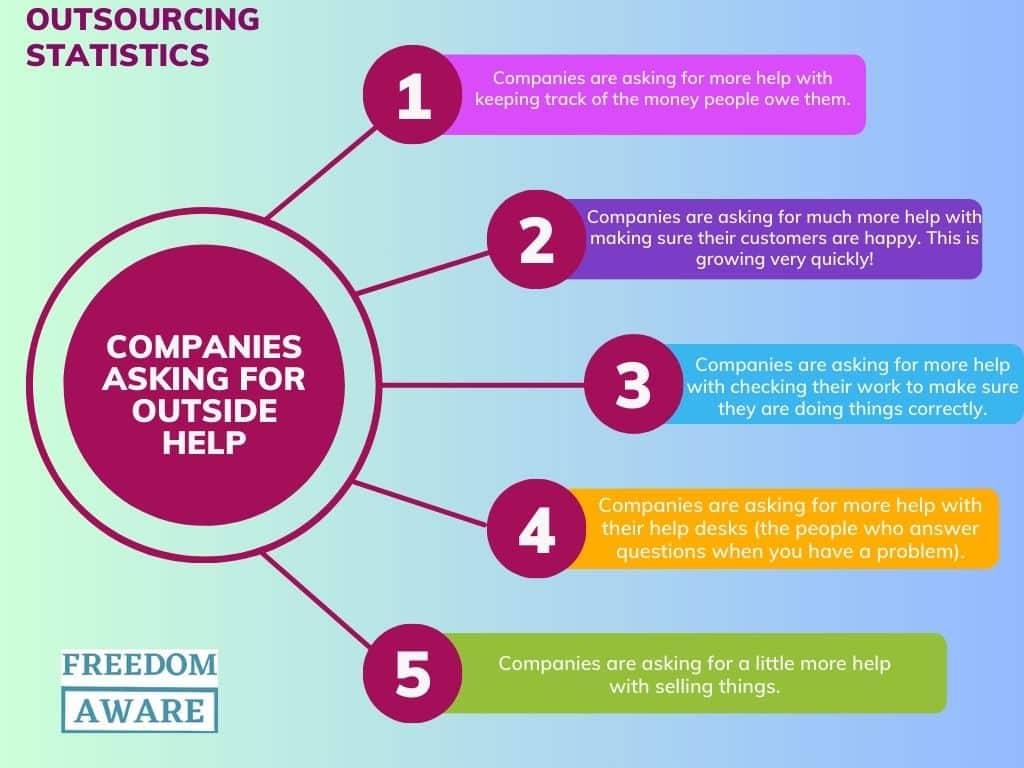
    1. Companies are asking for more help with keeping track of the money people owe them. (source)
    2. Companies are asking for much more help with making sure their customers are happy. This is growing very quickly! (source)
    3. Companies are asking for more help with checking their work to make sure they are doing things correctly. (source)
    4. Companies are asking for more help with their help desks (the people who answer questions when you have a problem). This is because more companies are starting up, they want to save money on customer support, and they want to help their customers better. (source)
    5. Companies are asking for a little more help with selling things. (source)
    6. In the US, companies are asking for more help with selling things so they can find new customers and sell more. (source)
    7. Companies are asking for more help with creating and fixing computer programs (software). (source)
    8. Hospitals, doctors, and other healthcare places are asking for a lot more outside help. (source)
    9. This includes asking for help with computer technology used in healthcare. (source)
    10. Healthcare companies are asking for help to save money, especially with things like making medicines. (source)
    11. Companies are asking for help with paying their bills. This is happening a lot in North America, Europe, and Asia. (source)
    12. Hospitals are asking for more help with different services, especially in North America. (source)
    13. Companies that make makeup and other beauty products are asking for more outside help with making, packaging, and testing their products. (source)
    14. Companies are asking for help with things like giving information about medicines and medical devices to doctors. (source)
    15. Companies that make medical devices (like heart monitors) are asking for more outside help with making those devices. (source)
    16. Many of these medical devices are things like bandages and other simple tools, and many of the companies helping are in Asia. (source)
    17. Companies are asking for help with protecting their ideas and inventions (intellectual property). (source)
    18. Companies are asking for help with taking care of their customers. (source)
    19. Companies are asking for a huge amount of help with engineering. (source)
    20. Companies are asking for help with writing down what people say (transcription). (source)
    21. Companies that make medicine are asking for more help with researching and developing new medicines. (source)
    22. Companies are asking for help with buying the things they need. (source)
    23. Companies are asking for help with money matters and counting. (source)
    24. Companies are asking for help with creating computer programs in other countries. (source)
    25. Companies are asking for more help with selling and advertising, especially because of things like cloud computing (using the internet to store and use information). (source)
    26. Companies are asking for more help with hiring and managing their employees. (source)
    27. Companies in India are asking for a lot more help with computers. (source)
    28. Companies are asking for more help with using computer programs. (source)

    ( Global Outsourcing Statistics):

    Here are some more facts about companies asking for outside help (outsourcing statistics)

    1. More and more companies are asking for help with counting money (accounting). They are spending more money on this, and more companies are interested in doing it. (source)
    Outsourcing Statististics
    1. A country called Poland is now a popular place for companies to go to get help with making computer programs (software). (source)
    2. Small businesses often ask for help with advertising (marketing), computers (IT), and making things look nice (design). (source)
    3. In China, lots of people got new jobs helping companies with different tasks. (source)
    4. In China, companies will spend a lot of money on getting help with computers, especially with computer tasks. (source)
    5. China is the most popular place for companies to go to get help making things and with computer stuff. (source)
    6. Lots more people searched online for information about asking for help with counting money. (source)

    Computer (IT) Help (Outsourcing Statistics):

    1. Some companies are thinking about asking other companies to fill very important computer jobs, like the people in charge of all the computers (CTO, CISO, CIO). (source)
    2. In Europe, more than half of the companies ask for outside help to keep their computers safe (cybersecurity). (source)
    3. In one European country called Luxembourg, even more companies ask for this kind of help. (source)
    4. Companies that check their work (internal audit) have had trouble finding people with the right skills. So, they are asking for more help from outside companies. (source)
    5. Companies are asking for more help with training people about computer safety and finding problems in their computers. (source)

    Medicine (Pharmaceutical) Help (Outsourcing Statistics):

    1. Companies that make medicine are starting to ask for more outside help instead of doing everything themselves. (source)
    2. Most companies that make special kinds of medicine (biopharmaceuticals) ask for outside help with testing their medicines. (source)
    3. Many of these companies prefer to ask one outside company to do all the work related to testing new medicines on people (clinical development). (source)
    4. Smaller companies do this even more than big companies. (source)
    5. Most of these companies will probably ask for outside help to find people who want to test new medicines in the next couple of years. (source)

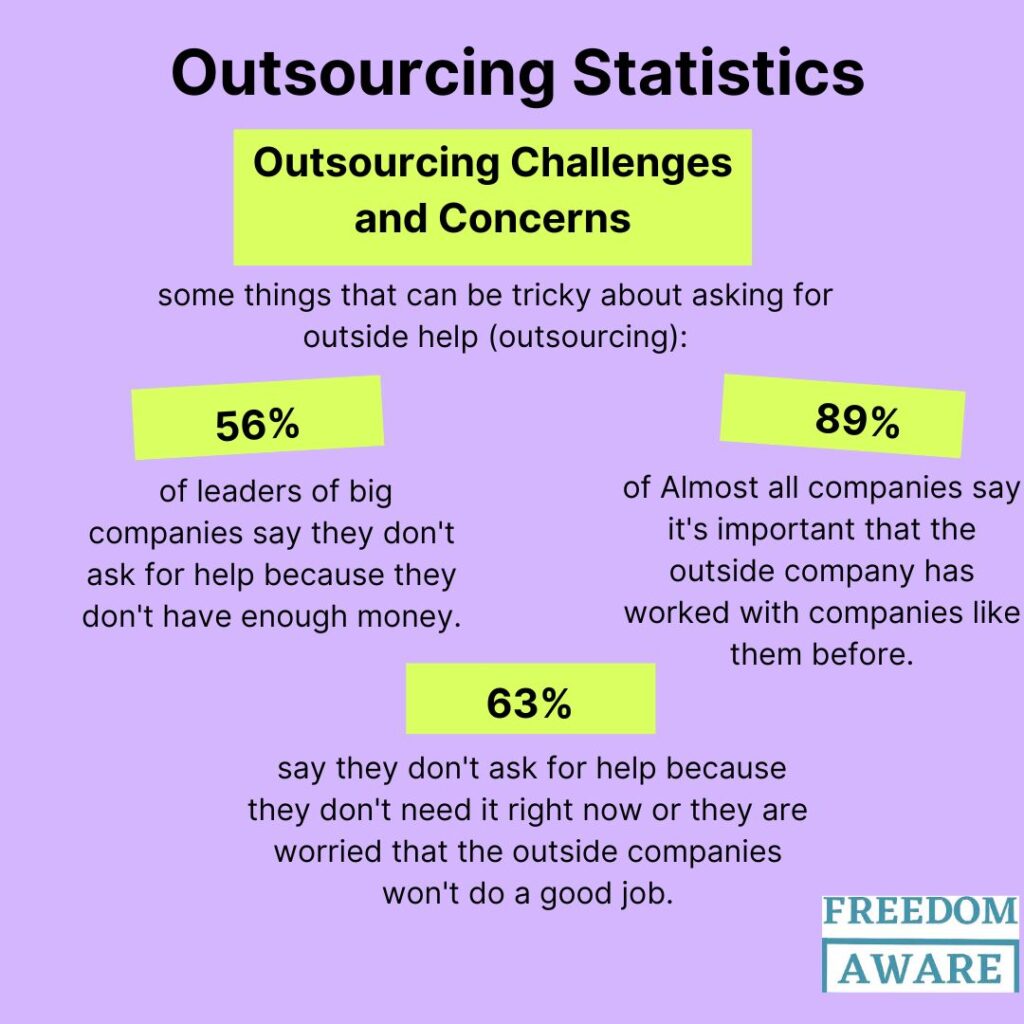
    Outsourcing Challenges and Concerns (Outsourcing Statistics) 

    Here are some things that can be tricky about asking for outside help (outsourcing):

    Outsourcing Statististics
    1. Lots of leaders of big companies (56 out of 100) say they don’t ask for help because they don’t have enough money. But even more (63 out of 100) say they don’t ask for help because they don’t need it right now or they are worried that the outside companies won’t do a good job. (source)
    2. Almost all companies (89 out of 100) say it’s important that the outside company has worked with companies like them before. Lots of companies (84 out of 100) also care about how the outside company keeps their information safe, and some (76 out of 100) care about saving money. (source)
    3. Most leaders (81 out of 100) are worried about computer safety (cybersecurity), and almost all of them (96 out of 100) ask for outside help to keep their information safe. (source)
    4. Half of the leaders say it’s hard to find good people to work for them. (source)

    Outsourcing Statistics that Show the Impact of BPOs (Outsourcing Statistics)

     Here are some more facts about companies asking for outside help (outsourcing), explained:

    1. Lots of companies (37 out of 100) ask for help with counting money (accounting). (source)
    2. The most common thing companies ask for help with is computers (IT). This is 37 out of every 100 times companies ask for help. (source)
    3. After counting money and computers, many companies (34 out of 100) ask for help with advertising online (digital marketing). (source)
    4. Some companies also ask for help finding new customers and calling them. (source)
    5. Some companies (28 out of 100) ask for help with growing their business to save money. (source)
    6. The things companies most often ask for help with are legal stuff, taxes, hiring people (HR), money stuff, and getting the things they need to make their products. (source)
    7. When it comes to computers, companies often ask for help with keeping their computers safe (cybersecurity), making apps and programs, managing their computer systems, using new technologies, looking at data, fixing apps, and helping people with computer problems. (source)
    8. Small businesses often look for help with advertising (marketing), computers (IT), and making things look nice (design). (source)
    9. When companies try to use online computer systems (cloud infrastructure), many of them (68 out of 100) have problems with the outside companies they ask for help. (source)
    10. Some companies (35 out of 100) are always worried about keeping their information safe when they share it with outside companies. (source)
    11. Even though some leaders are worried, many of them (44 out of 100) are still excited to work with outside companies and share information with them. (source)
    12. Some leaders (22 out of 100) are worried that asking for outside help might make the way their company works feel different in a bad way. (source)

    Conclusion (Outsourcing statistics)

    Outsourcing Statististics

    To sum it up, asking other companies for help (outsourcing) is still a very important way for businesses to get things done better, save money, and find people with special skills. The facts we talked about show that lots of different kinds of companies use outsourcing for things like computers, helping customers, and advertising.

    As the world becomes more connected and everything is becoming more digital, outsourcing is still a great way for companies to grow and stay ahead of their competition. By understanding what’s happening with outsourcing, companies can make good choices to do things better and grow bigger in the future.

  • Retail Divide: 51 Top In-store vs Online Shopping Statistics  2025

    Retail Divide: 51 Top In-store vs Online Shopping Statistics 2025

    In-store vs online shopping statistics

    In-store vs online shopping statistics you should know;

    With a few clicks, online shoppers can efficiently browse and buy, compare prices, and read reviews, all from the convenience of their homes. Yet, traditional in-store shopping offers unique value, providing a more experiential and involved shopping process. 

    As the lines between online and offline shopping continue to blur, retailers are faced with the challenge of adapting to new trends and technologies. But what do the numbers say about the state of retail today? 

    This article delves into the latest in-store vs online shopping statistics, exploring the trends, preferences, and habits shaping the industry’s future.

    Editor’s Pick: In-Store vs Online Shopping Statistics

    • US consumers shelled out a combined $7.071 trillion in physical stores and $1.257 trillion online in 2023, amounting to a total retail spend of $8.328 trillion.
    • Global Gen Z consumers are most likely to impulsively buy online because of enticing deals (43%), personal gratification and incentives (39%), the excitement of new finds, and the convenience of online payment (both at 37%).
    • In 2023, a significant portion of US consumers leaned towards exclusive online shopping, exemplified by platforms like Amazon. However, a notable 34% of Americans expressed uncertainty about their preferred shopping channel.
    • A striking 81.8% of the US population now prefers to buy groceries online rather than in-store purchases.
    • 40% of consumers make at least one in-store shopping trip weekly, compared to 27% who shop online with the same frequency.
    •  In 2023, online shopping represented around 19% of the global retail market, a share expected to expand to nearly 25% by 2027.
    • Online shopping is the most preferred shopping method for 67% of shoppers worldwide.
    • By 2026, global retail e-commerce sales will amount to $8.1 trillion.

    General In-Store vs Online Shopping Statistics

    1. According to a 2024 survey of 10,051 U.S. consumers, apparel and footwear emerged as the top online purchase categories, with 43% and 33% of respondents buying them respectively. (Source)
    2. Among all age groups, consumers aged 26-35 had the highest online fashion purchase rate at 82% in the past year. (Source)
    3. However, the trend wasn’t limited to younger demographics, with a surprising 73% of consumers aged 65 and older also shopping for clothes online. (Source)
    4. A 2022 U.S. survey revealed interesting consumer beliefs regarding returned online purchases. Nearly half (45%) believed these items were typically resold, while 36% were unsure, and 17% assumed they were discarded. (Source)
    5. As of December 2023, Shein.com emerged as the global leader in fast-fashion e-commerce, capturing over 2.6% of desktop traffic, followed closely by Nike at 1.93%. (Source)
    In-store vs online shopping statistics
    1. Recent industry projections show Turkey leading the global e-commerce market with a remarkable 11.6% CAGR from 2024 to 2029. Currently valued at a substantial 3.4 trillion Turkish lira, Turkey’s e-commerce sector is poised for significant growth. India and Brazil also demonstrate impressive e-commerce growth trajectories, with CAGRs exceeding 11%. (Source)
    2.  In December 2023, Amazon.de dominated the German online marketplace, capturing over half (53%) of desktop visits, followed by eBay.de at nearly 20%. (Source)
    3. Similarly, Amazon.com reigned supreme in the U.S. during the same period, accounting for 58% of desktop traffic in the marketplace category, with eBay.com trailing behind at 11.86%. (Source)
    4. Reflecting the surge in online shopping, returns on U.S. online purchases reached nearly $248 billion in 2023, marking a significant 16.4% increase from the previous year’s total of approximately $213 billion. (Source)
    5. After accounting for seasonal fluctuations, U.S. retail and food services sales reached $703.1 billion in May 2024. This represented a marginal 0.1% increase from April and a more substantial 2.3% growth compared to the same period in 2023. (Source)
    6. DoorDash outpaced competitors like Uber Eats to become the most downloaded online food delivery app in the U.S. during 2023, amassing over 21 million downloads. (Source)
    7. Retail trade sales experienced a modest 0.2% increase in April 2024 compared to the previous month. However, non-store retailers defied this trend with a robust 6.8% growth year-over-year. (Source)
    8. Between March and May 2024, total retail trade sales climbed by 2.9% year-over-year. (Source)
    In-store vs online shopping statistics
    1. In the United States alone, e-commerce sales are expected to surpass $740 billion by 2023. (Source)
    2. While there was a slight 0.2% dip from March to April, overall sales demonstrated positive growth. (Source)
    3. Amazon solidified its position as the undisputed leader of the U.S. online retail market in 2023, capturing a substantial 37.6% share. (Source)
    4. Walmart’s e-commerce platform held a distant second with 6.4%, followed by Apple at 3.6%. (Source)
    5. Shopper satisfaction with in-store experiences rebounded to 59% in March 2024, a significant improvement from its lowest point in January 2023. (Source)
    6. Consumers place greater trust in traditional brick-and-mortar stores compared to online-only retailers. (Source)
    In-store vs online shopping statistics
    1. Online shopping accounted for nearly one-fifth of global retail sales in 2023, and this figure is projected to climb to almost a quarter by 2027. (Source)
    2. In early 2024, a fifth of middle-income consumers prioritized online shopping for groceries and household goods, driven by convenience and perceived product quality. While in-store shopping remained popular, especially among older demographics, online shopping maintained a steady presence. (Source)
    3. While the pace of online shopper growth is expected to decelerate in the coming years, with annual increases gradually declining from 5.4% in 2025 to 2.9% in 2029, the overall trend remains upward. (Source)
    4. Online beauty shopping is gaining traction, particularly among men, with nearly one-third preferring this channel. (Source)
    In-store vs online shopping stsatistics
    1. Clothing emerged as the top online purchase in the U.S. in 2023, followed by footwear, food and beverages, accessories, and beauty products. (Source)
    2. The number of U.S. online shoppers is anticipated to surge by over 60% between 2020 and 2029, with an average annual growth rate of 5.4%. (Source)
    3. The U.S. witnessed a remarkable 8.1% increase in online shoppers in 2024, reaching approximately 270.11 million. This represents the fastest growth in at least four years. (Source)
    4.  In 2023, U.S. consumers spent a staggering $7.071 trillion in physical stores, significantly outpacing the $1.257 trillion allocated to online shopping, for a combined retail expenditure of $8.328 trillion. (Source)
    5. The United States led the world in online shopping preference in early 2023, with 43% of consumers favoring digital over physical stores. This contrasted with countries like Austria, Finland, and New Zealand, where in-store shopping remained dominant. (Source)
    6. A strong preference for online research before making significant purchases was evident among U.S. consumers in a 2024 survey, with 45% confirming this habit. (Source)
    7.  U.S. consumers expressed satisfaction with online retail experiences, as indicated by an 80 out of 100 score on the American Customer Satisfaction Index in 2023. (Source)
    In-store vs online shopping statistics
    1. 28% of consumers regularly shop online. (Source)
    2. Clothing emerged as the clear winner in a 2022 survey of U.S. consumers when asked about preferred shopping channels, with 36% opting for online purchases. (Source)
    3. According to the India Brand Equity Foundation, the Indian e-commerce landscape is set to expand exponentially, with a projected value of USD 16-20 billion in 2025 and a massive USD 350 billion by 2030. (Source)

    The Appeal of Online Retail (In-Store vs Online Shopping Statistics)

    1. Online retailers provide a significantly wider selection of products than traditional showrooms or malls. (Source)
    2. The number of online shoppers is on a trajectory of substantial growth, projected to surpass 300 million by 2027 and continue climbing to reach 331.46 million by 2029. (Source)
    3. A significant portion of online shoppers, 39.5%, are attracted by deals and discounts, while 25.7% value the opportunity to earn loyalty points. (Source)
    4. Consumers are drawn to online shopping due to factors like rapid delivery and convenient checkout. Over 30% of shoppers highlight next-day delivery, while another 30% emphasize the ease of completing purchases. (Source)
    5. Consumer trust in online retailers is enhanced by payment flexibility and return policies. Cash-on-delivery is a top reason for shopping online for almost 18% of consumers, while easy returns motivate over 31%. (Source)
    In-store vs online shopping statistics
    1. Free delivery proved to be a powerful catalyst for online sales in 2020, with over 50% of global consumers stating it encouraged them to complete purchases. (Source)
    2. Online shoppers rely heavily on peer feedback. Customer reviews drive 32.6% of purchases, and social media sentiment influences 22.4%. (Source)
    3. Online shopping has become a daily routine for many. A fifth of consumers make at least one online purchase every day, with a significant portion making multiple purchases daily. (Source)
    4. Online shopping frequency varies widely among U.S. consumers. While 21% shop monthly or less, 12% are weekly shoppers, and nearly half make multiple purchases each week. (Source)
    5. Ease and speed are key factors in online shopping. Over a third of U.S. shoppers prioritize convenience, while fast and affordable shipping options are also highly valued. (Source)
    6. 63% of consumers will buy from you online if they’ve had a positive in-store experience. (Source)
    7. 18% of people like shopping online because it’s available 24/7. (Source)

    Cross-Generational Comparison of Consumer Spending (In-Store vs Online Shopping Statistics)

    1. Younger generations are more inclined to shop internationally, with Gen Z leading the way. Sixty percent of Gen Zers have made cross-border purchases, compared to 57% of Millennials, 37% of Gen X, and 20% of Boomers. (Source)
    2. Nearly eight in ten Gen Z consumers globally prioritize online shopping for its convenience, including easy price comparisons, time savings, wider product range, flexible payment options, and detailed product information. (Source)
    In-store vs online shopping statistics
    1. Over a third of teenagers, aged 13 to 17, equally favor both online and in-store shopping. (Source)
    2. Amazon is the clear favorite among U.S. teenagers, with 56% identifying it as their top online shopping destination. Shein follows at a distant second with approximately 7% preference. (Source)
    3. Gen Z maintains a skeptical stance towards exclusively online brands while still actively participating in e-commerce. (Source)
    4. In the first quarter of 2023, France and Poland had the highest percentage of Gen Z consumers (82%) buying pre-owned items online, while Norway (83%) and Spain (79%) led in selling second-hand items. (Source)
    5. A clear majority (44%) of Gen Z consumers begin their shopping explorations online, with search engines (40%) and physical stores (35%) following as preferred starting points, highlighting a strong digital-first mindset. (Source)
    6. Gen Z adults are prolific shoppers with a penchant for discretionary spending. They frequently make multiple purchases across various categories each month (Source)
    7. Two-thirds of millennials favor online shopping over traditional brick-and-mortar stores. (Source)
    8. 60% of millennials’ purchases are made online. (Source)
    9. 56% of Gen X shoppers prefer to shop online versus in a brick-and-mortar. (Source)

    Conclusion: In-Store vs Online Shopping Statistics

    These statistics demonstrate the migration of consumer behavior from brick-and-mortar stores towards the ease and reach of online platforms. Nevertheless, it’s crucial to acknowledge the enduring significance of both shopping models for consumers. The future of retail will likely witness a harmonious coexistence of these channels. By recognizing these evolving trends and proactively adapting, businesses can effectively navigate this dynamic landscape and achieve sustained success

    In-store vs online shopping statistics

    FAQ (In-Store vs Online Shopping Statistics)

    Are people more likely to buy in-store or online?

    Online shopping offers unparalleled convenience, enabling customers to effortlessly explore a vast array of products, compare prices, and enjoy immediate possession of their purchases.

    Is it better to buy in-store or online?

    The best place to shop ultimately depends on the product, your personal preferences, and your priorities.

    Ultimately, a combination of both shopping methods often works best. For example, you might research products online and then visit a store to try them on before purchasing.

    What is the difference between eCommerce and in-store?

    eCommerce offers convenience and a broader reach, while in-store shopping provides a tangible product experience and immediate gratification.

    Which country buys online the most?

    China Leads the Pack in Online Shopping

    China is undoubtedly the world’s largest online shopping market. Its massive population, rapid technological advancements, and thriving e-commerce ecosystem have propelled it to the top.

  • 53 Revealing B2B Sales Statistics: Boost Your 2025 Sales

    53 Revealing B2B Sales Statistics: Boost Your 2025 Sales

    B2B Sales Statistics

    B2B sales statistics provide valuable insights into market trends, buyer behavior, and sales performance; 

    B2B e-commerce sales surged, 12% in 2023 to $1.77 trillion and are projected to reach $26.59 trillion by 2030. Understanding the latest statistics is crucial for businesses aiming to refine their strategies and drive growth. As we move into 2025, several key trends and statistics are emerging to help enterprises navigate this competitive environment.

    This article will explore key B2B sales statistics, implications, and strategies for leveraging this data to enhance sales performance.

    Key B2B Sales Statistics (Editor”s Pick)

    1. The global B2B e-commerce market is projected to reach $25.6 trillion by 2028, growing at a CAGR of 17.5%.
    2. 67% of B2B sales professionals believe that data-driven decision-making is crucial for their success.
    3. 78% of salespeople who use social media outperform their peers who do not, highlighting the importance of social selling in B2B.
    4. 70% of B2B buyers prefer remote interactions with sales representatives, a trend that has continued post-pandemic.
    5. 80% of buyers are more likely to purchase when a seller provides personalized experiences.
    6. The average B2B sales cycle lasts approximately 6 to 12 months, depending on the industry and complexity of the product.
    7. B2B companies that excel at lead nurturing generate 50% more sales-ready leads at a 33% lower cost.
    8. 70% of B2B buyers consume three or more pieces of content before engaging with a sales representative.
    9. Increasing customer retention by just 5% can lead to an increase in profits of 25% to 95%.
    10. Companies with a formal sales process see a 28% increase in sales performance compared to those without a defined process.

    General B2B Sales Statistics

    1. US B2B companies are increasingly turning to digital channels for revenue generation. By 2025, a significant 56% of revenue is expected to originate from online sources, up from 34% in 2021. However, third-party platforms need to be more utilized in B2B sales, with 81% of B2B companies prioritizing their own websites for selling products and services in 2022. (Source)
    2. Approximately 700,000 B2B sales roles are projected to be vacant in 2024. (Source)
    3. The global B2B e-commerce market is poised for significant growth, with revenue projected to surge from USD 9,209.3 billion in 2023 to a substantial USD 33,317.4 billion by 2030. (Source)
    B2B Sales Statistics
    1.  A significant majority of companies, over 65%, now prefer remote and digital interactions to traditional, in-person meetings. (Source)
    2. Supply chain disruptions were identified as the primary hurdle to achieving sales and marketing objectives by 26% of B2B organizations. Nevertheless, 29% anticipate inflation to be their most significant challenge. (Source)
    3. The global B2B e-commerce market, valued at $18.67 trillion in 2023, is projected to experience substantial growth, expanding at a CAGR of 18.2% from 2024 to 2030.  (Source)
    4. In the next year, 40% of B2B companies will focus on gathering more first-party data to refine their go-to-market strategies. (Source)
    5. The home & kitchen segment dominates the ‘Product’ category, accounting for a significant 22% market share in 2023. (Source)
    6. US B2B organizations have witnessed a growth in their digital revenue share, increasing from 34% in 2021 to 45% in 2023, with expectations of reaching 56% by 2025. (Source)
    7. Norway’s B2B e-commerce sales of physical goods experienced significant growth, reaching $9 billion in 2022, and are projected to increase further to $10.7 billion by 2025. (Source)
    B2B Sales Statistics
    1. SaaS businesses’ average customer attrition rate is between 5% and 7%. (Source)
    2. Digital sales are on the rise in the B2B sector, with 14% of all B2B sales projected for 2023, up from 12.2% in 2020. Online channels are becoming increasingly important in the B2B customer journey. (Source)
    3. The digital revenue share of UK B2B organizations has surged from 33% in 2021 to 46% in 2023 and is projected to reach 56% by 2025. (Source)
    4. Despite a slight dip in 2023, Germany’s B2B e-commerce market for physical goods, valued at $104.66 billion, is poised for growth, projected to reach $119 billion by 2026. (Source)
    5. The B2B Sales Outsourcing Services Market is set to expand steadily, growing from $2.734 billion in 2023 to $3.96 billion by 2031, at a 4.2% annual growth rate. (Source)
    6. In 2023, an estimated 14% of B2B sales are projected to be digitally influenced, a significant increase from 12.2% in 2020. This demonstrates that digital interactions play a crucial role, even if the final purchase isn’t completed online. (Source)
    7. B2B e-commerce sales surged 17% in 2023, encompassing manufacturers, distributors, wholesalers, and retailers. (Source)
    8. B2B organizations are prioritizing data quality. 79% anticipate increased investments in sales and marketing data quality, while nearly 80% have already done so in the past year. (Source)
    B2B Sales Statistics
    1. A mere 8% of B2B companies utilize a partnership channel. High-performing B2B firms concentrate on accounts and customer profiles with a proven history of successful deals, providing them with a competitive advantage. (Source)

    Customer Journey Insights (B2B Sales Statistics)

    1. Only a third (36%) of B2B buyers rate their B2B e-commerce site experience as excellent. (Source)
    2. A significant number of B2B executives (70%) are willing to spend substantial amounts, up to $500,000 or more, in a single online transaction. (Source)
    3. A significant portion of US buyers (67%) rely on search engines to discover products, while 50% explore online marketplaces. (Source)
    4. A substantial number of businesses (70%) are open to switching vendors if their needs are not met or if they have a poor buying experience. (Source)
    5. Over half (52%) of B2B sales professionals report a significant increase in customer usage of self-service tools compared to the previous year. (Source)
    6. Many B2B buyers (70%) find online purchasing more convenient and prefer this method when making purchases. (Source)
    7. The number of marketing and sales touchpoints in the B2B buying journey has doubled in just five years, from 5 to 10. (Source)
    8. Price increases were identified as the primary cause of customer loss by 71% of companies. (Source)
    B2B Sales Statistics
    1. B2B buyers now allocate approximately 33% of their time to engaging with self-serve content throughout the entire buying process. (Source)
    2. Customer loyalty is a significant challenge in B2B markets, with 80% of frequent buyers switching suppliers within two years. (Source)

    Sales Process (B2B Sales Statistics)

    1. Most (90%) of B2B decision-makers believe that closer collaboration between marketing and sales teams is essential to eliminate redundancies and improve overall efficiency. (Source)
    2. Hybrid and digital B2B sales roles are experiencing the fastest growth. Sales leaders are increasing the number of hybrid sales professionals, who combine field and inside sales skills by 50%. (Source)
    3. A significant portion (35%) of North American B2B tech marketers and decision-makers view consistent communication and lead generation as crucial for fostering strong sales relationships. (Source)
    4. A substantial number of B2B sellers (57%) find marketing team content to be too generic and unengaging, leading them to disregard it. (Source)
    5. A significant proportion (64%) of B2B sales professionals provide self-service tools to assist buyers in decision-making. Furthermore, 85% of sales professionals find these tools to be effective. (Source)
    6. Many sales professionals (28%) attribute deal cancellations to lengthy sales processes. (Source)

    Sales Performances (B2B Sales Statistics)

    1. The average sales close rate across B2B industries is 29%. (Source)
    B2B Sales Statistics
    1. B2B sales representatives often attribute lost deals to “indecision” (61%). For average performers, other common reasons include budget constraints (22%), lack of priority (20%), and competitive pressures (14%). (Source)
    2. In contrast, top-performing B2B sales representatives are significantly less likely to lose deals due to indecision. Instead, they cite a lack of features (25%) and concerns about return on investment (ROI) (10%) as primary reasons. This suggests a more strategic sales approach. (Source)
    3. Many B2B sales representatives (73% in 2023 and 69% in 2024) missed their sales quotas. While the 2024 figure might seem better, it’s important to note that quotas were reduced by 19%. If quotas had remained the same, many reps would have missed their targets. Furthermore, only 15% of B2B sales teams have more than half of their reps consistently achieving high-performance levels (80% or more of their quota). (Source)
    4. In 2022, e-commerce dominated B2B sales in Scandinavia. A significant portion of B2B companies (24%) utilized secure e-commerce platforms, while 22% of wholesalers and manufacturers opted for public online marketplaces. (Source)
    5. Italy’s B2B market experienced substantial e-commerce growth between 2018 and 2022. The share of e-commerce sales increased from 13% to 21% during this period. (Source)
    6. E-procurement’s role in B2B sales expanded, reaching over 7% in 2022. While other e-commerce platforms remained popular, this growth indicates an increasing reliance on e-procurement solutions. (Source)
    7. Although only a small percentage (8%) of B2B organizations can deliver highly personalized marketing, those that do reap significant rewards. A remarkable 75% of these organizations reported gaining market share. (Source)
    8. Salespeople who prioritize soft skills development gain a significant performance advantage. They are 11% more likely to meet their sales targets than those who do not. (Source)
    B2B Sales Statistics
    1. B2B sales teams faced a tough year in 2023 due to a bearish market. Despite initial improvements, win rates declined significantly compared to the previous two years as budgets tightened. (Win rates ultimately fell by 18% compared to 2022 and 27% compared to 2021) (Source)
    2. In 2023, a substantial number of B2B organizations (40%) reported that less than half of their sales team met their annual sales quotas. (Source)
    3. B2B marketplace sales experienced significant growth in 2023, doubling compared to the previous year. (Source)
    4. B2B companies that effectively leverage customer analytics are 1.5 times more likely to achieve rapid growth and can boost earnings by 15-25%. (Source)

    B2B Sales Technology Statistics (B2B Sales Statistics)

    1. A significant 60% of sales leaders are prioritizing investments in prospecting technology. (Source)
    2. A significant 61% of marketers reported to the Content Marketing Institute that their organizations either lack the necessary technology or fail to fully leverage the potential of their existing tools. (Source)
    3. According to 73% of sales leaders, sales and revenue technologies are effectively enabling their sales teams to succeed. (Source)
    4. LinkedIn’s Deep Sales Playbook reveals that AI adoption in sales is growing, with 39% of sellers currently leveraging AI to streamline their sales processes. (Source)
    5. According to McKinsey research, the 2024 B2B tech market is projected to grow by 3% points from 2023, despite inflation. This positive outlook is fueled by increased technology spending among over half of enterprises. (Source)

    B2B Sales Trends

    1. AI In Sales Operations

    This trend leverages AI technologies to revolutionize sales processes, driving significant efficiency, productivity, and customer engagement improvement.

    AI automates mundane tasks, such as data entry and lead qualification, freeing up sales teams to focus on high-impact activities like relationship building and closing deals. Furthermore, AI analyzes massive datasets to uncover valuable customer behavior and preferences insights.

    By integrating AI into their sales operations, businesses can unlock a range of benefits, including:

    • Increased sales performance and revenue growth.
    • Improved sales forecasting accuracy.
    • Enhanced customer satisfaction and loyalty.
    • Reduced sales cycle times and costs.
    • A significant competitive advantage in the market.

    In 2025, AI will continue to be a transformative force in B2B sales, empowering sales teams to achieve greater success.

    1. Elevated Account-Based Sales Approach

    Account-Based Selling (ABS) focuses on targeted engagement with specific high-value accounts and their key decision-makers. Unlike traditional broad-based approaches, ABS delivers personalized marketing and sales efforts to each account.

    This strategic approach empowers B2B sales teams to:

    • Develop a deep understanding of individual customer needs.
    • Deliver highly targeted marketing and sales messages.
    • Build strong and trusted relationships.
    • Drive higher conversion rates and revenue growth.

    Given the demanding and intricate buying processes prevalent today, ABS offers a crucial competitive edge. By prioritizing accounts with the highest potential, businesses can differentiate themselves and drive sustainable growth.

    As we move into 2025, ABS will become even more critical. Leveraging data analytics and digital tools, sales teams can effectively identify and target the most valuable accounts, delivering personalized experiences that foster long-term customer relationships and maximize revenue.

    1. Remote Selling

    Remote selling is a defining trend in B2B sales for 2025. This approach leverages digital tools and technologies to connect with customers and close deals virtually, eliminating the need for in-person meetings.

    Remote selling empowers sales teams to engage with customers anytime, anywhere, offering a more flexible and convenient buying experience. By transcending geographical limitations, businesses can connect with a wider customer base across diverse regions, time zones, and languages.

    This trend allows sales teams to prioritize high-value activities, such as building strong relationships, deeply understanding customer needs, and delivering personalized solutions.

    Driven by advancements in digital communication, virtual and augmented reality, and artificial intelligence, remote selling will continue to reshape the B2B sales landscape.

    To thrive in this evolving environment, sales teams must adapt by developing new skills and strategies to engage with customers remotely and build trust in a virtual setting.

    1. Data-Driven Decision Making

    Data-driven decision-making is a pivotal trend in B2B sales for 2025. By leveraging data analytics, sales teams gain deeper insights into customer behavior, preferences, and needs. This empowers them to make informed decisions that drive sales strategies and interactions.

    Globally, over 40% of companies already utilize big data analytics, demonstrating the widespread recognition of its value. These organizations are experiencing a range of benefits by harnessing the power of data.

    To effectively implement this approach, businesses must:

    1. Gather and integrate data from diverse sources.
    2. Analyze and interpret this data using advanced analytics tools.
    3. Equip sales teams with the necessary data analysis and interpretation skills.
    4. Continuously refine sales strategies based on the insights gleaned from data.

    By embracing this data-driven approach, businesses can expect to achieve:

    • Higher sales conversion rates.
    • Enhanced customer satisfaction.
    • Increased efficiency and productivity.
    • Improved ROI measurement and optimization.

    Conclusion (B2B Sales Statistics)

    In essence, informed planning is the foundation of B2B sales success. The B2B sales statistics presented here serve as a roadmap for businesses aiming to maximize performance in 2025. These insights empower businesses to build robust and targeted sales strategies, from understanding buyer behavior to effectively leveraging technology. With this data-driven approach, businesses can confidently navigate the evolving landscape and achieve sustained growth.

    B2B Sales Statistics

    FQA (B2B Sales statistics)

    What is the biggest challenge in B2B sales?

    Sales professionals navigate a complex landscape of challenges, including extended sales cycles, data gaps, and talent acquisition hurdles. Despite these obstacles, cultivating strong human connections remains the cornerstone of sales success.

    What is the success rate of B2B sales?

    Upselling is a key revenue driver for B2B companies, with 91% of sales professionals engaging in the practice and generating an average of 21% of company revenue. While 87% of B2B sellers prioritize in-person meetings before closing deals, 67% of buyers concur on the importance of face-to-face interactions.

    What are the statistics of B2B customers?

    The digital transformation of B2B is evident in several key trends. 77% of B2B customers engage in thorough research before purchase, while 35% of companies expect online sales to increase next year. Social media plays a crucial role, with 84% of B2B buyers utilizing these platforms in their decision-making process. LinkedIn stands out as a significant source of B2B leads, contributing 80% of social media leads for marketing initiatives.

  • Top B2B Lead Generation Statistics 2025: What’s Hot and What’s Not On  B2B Leads and Conversion Rates

    Top B2B Lead Generation Statistics 2025: What’s Hot and What’s Not On  B2B Leads and Conversion Rates

    B2B Lead Generation Statistics

    Discover the latest B2B lead generation statistics and trends;

    A robust lead generation strategy is essential for business growth. By implementing effective lead generation tactics, you can significantly enhance the quality of your leads and drive more conversions. 

    Lead generation is the process of attracting and converting potential customers into leads. These leads are individuals or businesses who have shown interest in your product or service and have provided their contact information, such as email address or phone number. Lead generation aims to build a pipeline of qualified prospects that your sales team can nurture and convert into paying customers.

    That’s why understanding the latest B2B lead generation statistics is key. They are a game changer when it comes to building a winning strategy.

    Key B2B lead generation statistics (Editor’s Pick)

    • 50% of marketers prioritize lead generation in their marketing campaigns.
    • Organizations generate 1,877 leads per month on average.
    • 68% of B2B marketers use landing pages to generate leads.
    • 61% of B2B marketers say high-quality leads are the biggest challenge.
    • 47% of marketers use LinkedIn to generate leads, and 45% of them gain customers through the platform.
    • Only 56% of B2B companies verify business leads before passing them to the sales team.
    • 27% of B2B leads are sales-ready when first generated.
    • 80% of new leads never turn into sales.
    • 74% of companies say converting leads into customers is their top priority.
    • 65% of businesses say generating traffic and leads is their biggest challenge.
    • 63% of consumers requesting information about a company will not purchase for at least 3 months.
    • 56% of leads aren’t ready to buy yet.

    General B2B Lead Generation Statistics

    1. Global B2B Lead Generation Market Takes Off: The global B2B lead generation industry is witnessing explosive growth, expanding from $2.4 billion in 2023 to a projected $6.5 billion by 2032. This translates to a remarkable 11.8% annual growth rate. The market encompasses regions like Asia Pacific, North America, Latin America, Europe, and the Middle East & Africa. (Source)
    2. B2B Lead Generation Prioritization: While building brand awareness and increasing sales are common marketing goals, lead generation remains a top priority for half of all marketers, according to HubSpot’s State of Marketing report. (Source)
    3. The B2B Marketing Boom: U.S. B2B advertising and marketing spending is on a tear, reaching a staggering $59.5 billion in 2024 and projected to balloon to over $69 billion by 2026 with a gain of nearly $10 billion in just two years. (Source)
    B2B Lead Generation Statistics
    1. Digital Dominance: In 2024, B2B companies in the U.S. invested an estimated $18.3 billion in digital advertising. This robust market is expected to grow even further, reaching a projected $23 billion by 2026. (Source)
    2. Lead Quality and Quantity in B2B Content Measurement: A recent survey found that over half of B2B marketers have used the quantity and quality of leads to assess their content performance in the past year. However, quality of leads emerged as a slightly more popular metric, with 52% of marketers adopting it compared to 57% using quantity of leads. (Source)
    3. B2B Trade Shows Rebound: The U.S. B2B trade show market has demonstrated a strong recovery, surpassing pre-pandemic levels and reaching $15.78 billion in 2024. This positive trajectory is expected to continue, with the market projected to reach $17.3 billion by 2028. (Source)
    4. B2B Prioritizes Lead Gen: B2B companies understand the importance of lead generation, dedicating a significant 36% of their marketing budget to it, compared to the 32% allocated by mainstream businesses. (Source)
    5. High-Quality Leads Drive B2B Success: A study revealed that top-performing B2B companies excel at generating high-quality leads, outperforming their peers by a factor of 2.5. This superior ability to attract qualified leads directly translates to a higher return on investment (ROI). (Source)
    6. Content Marketing on the Rise: A recent survey revealed a growing trend among B2B marketers, with over two-fifths planning to increase their investment in content marketing within the next year. Notably, more than one in ten anticipate a significant expenditure boost of over 9%. (Source)
    7. Prioritizing Lead Quality in B2B Content Evaluation: When evaluating content performance, B2B marketers overwhelmingly favor lead quality as a key metric, with 60% relying on it the most. Quantity of leads, while still relevant, was used by 34% of marketers as their primary metric. (Source)
    8. A Clear Advantage in Lead Generation: B2B leaders are outperforming mainstream companies when it comes to lead generation capabilities, particularly in areas like cost and ROI measurement (41% vs. 14%), planning and strategy (54% vs. 21%), account-based marketing (50% vs. 20%), and lead volume (38% vs. 15%). (Source)
    B2B Lead Generation Statistics
    1. Continued Growth in B2B Marketing Technology Spending: U.S. B2B marketers continued to invest significantly in marketing technology, with spending increasing by 12.7% in 2023 to reach $7.68 billion. This upward trend is projected to persist, with spending expected to exceed $8.7 billion in 2024. (Source)
    2. Rising Investment in B2B Marketing Data: The importance of data-driven marketing is evident in the growing investment in B2B marketing data. Spending is anticipated to increase by 2.5% in 2024, reaching $3.8 billion, and then climb further by nearly 4% in 2025, reaching $4 billion. (Source)
    3. Offline B2B Marketing Gains Momentum: Traditional offline B2B advertising and marketing in the U.S. experienced a resurgence in 2024, reaching $39.1 billion. This upward trend is anticipated to persist, with spending expected to increase steadily to $42 billion by 2026. (Source)
    4. High-Volume Lead Generation in Demand: The hunger for leads is real. A staggering 58% of surveyed B2B businesses aim to generate a massive 1,000+ online leads every month, highlighting the strong desire for high-volume lead capture. (Source)
    5. E-commerce Boom in Manufacturing: The digital transformation of the U.S. manufacturing industry accelerated in 2022, as B2B e-commerce sales surged by 15% to reach $623 billion. This marked a substantial increase from the previous year’s $543 billion, highlighting the growing adoption of online platforms for business-to-business transactions. (Source)
    6. Marketing Investment Disparity Between B2B Product and Service Companies: A recent survey of U.S. marketing leaders revealed a notable difference in marketing investment between B2B product and service companies. Product companies allocate an average of 9.4% of their revenues to marketing, significantly outspending service companies, which allocate an average of 6.3%. (Source)
    7. North America Leads the Charge: In 2023, North America dominated the B2B lead generation services market. This dominance can be attributed to the region’s cutting-edge digital infrastructure, substantial investments in technology, and the presence of numerous leading tech companies. The United States, a major hub for B2B commerce, stands out as a pioneer in adopting lead generation services and driving market expansion. (Source)
    8. High Conversion Rates in the Legal Services Industry: The legal services industry has established itself as a leader in B2B conversion rates, demonstrating exceptional effectiveness in converting leads into paying customers. (Source)

    Inter-industry comparison of B2B lead conversion rates

    No. B2B IndustryAverage Conversion Rate
    1. Legal services7.4%
    2. HVAC services3.1%
    3. Staffing & Recruiting2.9%
    4. Higher Education & College2.8%
    5. Real Estate2.7%
    6. Industrial IoT2.6%
    7. Oil & Gas2.5%
    8. PCB Design & Manufacturing2.4%
    9. Financial services1.9%
    10. Heavy Equipment1.7%
    11. Transportation and Logistics1.4%
    12. Software Development1.1%
    13. B2B SaaS1.1%

    Technology Impact on B2B Lead Generation Statistics

    1. AI Driving Growth in B2B Lead Generation Services: The B2B lead generation services market is poised for growth, fueled by the integration of artificial intelligence. AI enables companies to analyze customer behavior in real-time, tailor their services to individual businesses, and improve overall results. (Source)
    B2B Lead Generation Statistics
    1. Chatbots Boosting B2B Lead Generation: B2B marketers leveraging chatbots have reported substantial increases in lead generation. Nearly a quarter saw a double-digit boost, with 26% experiencing a 10-20% increase and 15% achieving a remarkable 30% or more. These results underscore the effectiveness of chatbots as a lead-generation tool. (Source)
    2. Chatbots, A Versatile Tool for B2B Marketers: A survey revealed that B2B marketers utilize their demand generation programs for various purposes. The most common uses include gaining a better understanding of their audience (57%), generating new leads (55%), and educating prospects (43%). This demonstrates the versatility of chatbots in supporting diverse marketing objectives. (Source)
    3. Generative AI: A Game-Changer for B2B Content: B2B marketers identify content creation and personalization as the areas where generative AI-powered tools offer the greatest potential. A vast majority, 94%, see these tools as valuable assets for enhancing their content strategies. (Source)
    4. Marketers’ Optimism About AI in B2B Marketing: A significant majority of marketers, 85%, expressed confidence in the positive impact of AI on B2B marketing in the year 2023. This reflects a growing recognition of AI’s potential to transform the industry. (Source)

    Lead Generation Channels (B2B lead Generation Statistics)

    1. Digital Channels Dominating B2B Revenue: U.S. B2B companies were increasingly turning to digital channels for revenue and lead generation. Online sources were projected to generate 56% of revenue by 2025, a significant leap from 34% in 2021, indicating a rapid shift towards digital sales. (Source)
    2. Supplier Websites and B2B Marketplaces Lead the Way: A 2023 survey of U.S. businesses revealed a strong preference for shopping through supplier websites/apps and B2B marketplaces. These channels emerged as the most popular options for making business purchasing decisions. (Source)
    B2B Lead Generation Statistics
    1. Websites and blogs are the primary lead generation: Websites and blogs are the primary lead generation channels for most marketers, with 90.7% and 89.2% utilizing them respectively. (Source)
    2. Digital Channels Drive B2B Sales: In 2023, digital channels were poised to account for a growing portion of B2B sales, increasing from 12.2% in 2020 to 14%. Online channels played a pivotal role in the B2B customer journey, with a significant number of U.S. buyers utilizing search engines for product discovery and browsing online marketplaces, even if the final purchase was made offline. (Source)
    3. Content Marketing Delivers Results for B2B: Content marketing proved its worth for B2B businesses in 2023, with nearly 60% of marketers reporting a direct impact on sales and revenue. This represents a substantial increase of 16% compared to the previous year. (Source)
    4. Virtual Events and Website/SEO: B2B marketers have identified virtual events and website/SEO as the most effective channels for generating high-quality leads. These strategies consistently deliver superior results in attracting qualified prospects. (Source)
    5. Video and Podcast Marketing: Video and podcast marketing have yet to gain widespread adoption among B2B marketers. Only 31% view these channels as important, suggesting that they remain relatively underutilized strategies. (Source)
    6. Social Media Marketing: Social media marketing has faced challenges in generating high-quality leads. A significant portion of B2B marketers, 16%, reported that it does not yield satisfactory results. (Source)
    7. Paid Ads and Social Media: Despite their popularity, paid ads and social media contribute a relatively small portion to B2B website traffic, lead generation, and sales. In the e-commerce sector, their contribution falls below 20%. (Source)
    8. Organic Search Reigns Supreme in B2B Lead Generation: When asked about the most effective sources for finding leads, B2B marketers overwhelmingly chose organic search, with 42% selecting it as their top choice. Paid search and paid social followed, but at a significant distance with 15.6% and 14%, respectively. (Source)
    9. Content Marketing Builds Brand Reputation and Drives Leads: A vast majority of B2B marketers, 84%, attributed their brand’s reputation building to content marketing. Additionally, three-quarters credited content marketing with driving customer interest and leads, while over 60% found it effective in fostering stronger relationships with their target audience. (Source)
    B2B Lead Generation Statistics
    1. LinkedIn Reigns Supreme in B2B Social Media: A global survey of large B2B content marketers in 2023 identified LinkedIn as the most valuable organic social media platform, with 79% of respondents citing it as such. Facebook, YouTube, and Instagram followed, while Twitter and TikTok lagged behind with less than 10% of respondents recognizing their value. (Source)
    2. Email and Website/SEO: For B2B marketers, email marketing and website/SEO are the cornerstone channels in their current strategies, with a vast majority, 83%, considering each one crucial. Content marketing and social media marketing also hold significant value, with 75% and 74% of marketers, respectively, deeming them important. (Source)

    The Future B2B Lead Generation Statistics

    1. AI-Generated Marketing Messages on the Rise: Large organizations increasingly turn to artificial intelligence to generate outbound marketing messages. By 2025, it’s estimated that 30% of these messages will be AI-generated, a significant leap from less than 2% in 2022. (Source)
    2. B2B Leaders Prioritize Marketing Investment: B2B leaders are more likely to increase their marketing budgets than mainstream companies. A substantial 72% of B2B leaders plan to boost their spending next year, while only 51% of mainstream companies intend to do the same. Moreover, a smaller proportion of B2B leaders expect their budgets to remain stagnant or decrease, with 24% and 4%, respectively. (Source)

    Challenges and Solutions (B2B Lead Generation Statistics)

    1. Lead Quality: A 2024 survey highlighted lead quality as a significant challenge for B2B companies. A substantial 40% of respondents cited it as one of their top three challenges, indicating a significant increase from previous years. (Source)
    2. Lead Quality and Generation: In 2023, B2B marketers faced significant challenges in improving lead quality and conversion rates, with 54% identifying it as a major hurdle. Generating more leads was also a challenge for 41% of marketers. (Source)
    3. The Importance of Lead Nurturing: While over 35% of B2B marketers have developed lead nurturing strategies, a significant portion of new leads, around 80%, fail to convert into sales. Companies that effectively nurture leads, however, can generate 50% more sales-ready leads at a 33% lower cost. (Source)
    4. Attracting Quality Leads: Nearly half of B2B content marketers identified attracting quality leads as a significant challenge. This highlights the need for effective content strategies to capture the attention of target audiences. (Source)
    5. Nurturing Leads for Maximum Impact: A significant portion of your latest marketing campaign leads, nearly two-thirds, are primed to make a purchase or hire your company. However, to fully capitalize on this opportunity, 73% of these leads require nurturing through various channels, including phone calls, texts, emails, and in-person meetings. (Source)
    6. Demonstrating Marketing Value:  A survey of U.S. B2B marketing decision-makers identified misaligned marketing and business goals, lack of measurement capabilities, and difficulty in translating marketing metrics into business insights as the top obstacles in demonstrating marketing value. To address these challenges, organizations must foster alignment between marketing and sales, invest in robust measurement tools, and develop data-driven insights to showcase the impact of marketing efforts. (Source)
    7. Room for Improvement in B2B Lead Nurturing: Over half of B2B professionals believe their lead nurturing strategies need improvement, while another quarter consider them to be merely average. This suggests that there is a significant opportunity to enhance lead nurturing processes and deliver a more effective buyer experience. (Source)
    B2B Lead Generation Statistics
    1. Key KPIs for B2B Content Marketing: A 2023 global survey of B2B marketers identified conversions (73%), email engagement (71%), and website traffic (71%) as the top KPIs for measuring content marketing performance. These metrics are essential for assessing the effectiveness of content in driving business objectives. (Source)
    2. Content Marketing Driving Business Success: B2B marketers worldwide have leveraged content marketing to achieve significant business outcomes. Over 80% reported increased brand awareness, while 76% saw improvements in lead generation and demand. Additionally, 50% noted growth in customer loyalty, demonstrating the versatility of content marketing. (Source)
    3. Marketing Automation Boosts Qualified Leads: Businesses that have implemented marketing automation have experienced a remarkable 451% increase in leads that meet qualification standards. This highlights the power of automation in driving lead generation and improving lead quality. (Source)
    4. Prioritizing Lead Generation and Quality: Generating more leads and improving lead quality and conversion rates were among the top priorities for B2B marketers in 2023. Nearly half of marketers focused on lead generation, while 46% prioritized enhancing lead quality and conversion. (Source)
    5. The Underutilized Power of Appointment Setting: While 90% of B2B marketers recognize the effectiveness of appointment setting in generating leads, only 21% consider it a critical part of their strategies. This suggests a significant opportunity to leverage appointment setting to drive lead generation and sales. (Source)
    6. Personalized Outreach and Empathy Drive B2B Lead Generation: A survey of U.S. marketing decision-makers revealed that personalized outreach and understanding buyer challenges are the key drivers of successful B2B lead generation. This emphasizes tailoring engagement strategies to individual buyers and demonstrating empathy for their needs. (Source)
    7. Negative B2B E-commerce Experiences: A global survey revealed that a significant number of B2B buyers have had negative experiences on B2B e-commerce sites. Nearly 24% reported a very negative experience, while another 15% had a somewhat negative one. (Source)
    8. Overcoming Challenges in Account-Based  Marketing: A survey of U.S. B2B marketers identified the top challenges in implementing account-based marketing: a lack of internal expertise, buyer interest, and unclear best practices. To overcome these challenges, organizations must invest in training, develop effective buyer engagement strategies, and establish clear guidelines for their account-based marketing initiatives. (Source)

    B2B Lead Generation Trends (B2B Lead Generation Statistics)

    1. Interactive and Immersive Content: A New Dimension of Engagement

    Interactive and immersive content redefines customer experiences. Virtual reality (VR) transports users to simulated 3D environments, while augmented reality (AR) overlays digital elements onto the real world. IKEA’s AR app allows customers to visualize furniture in their homes, boosting satisfaction and reducing returns. This innovative approach demonstrates the power of interactive content to drive engagement and conversions.
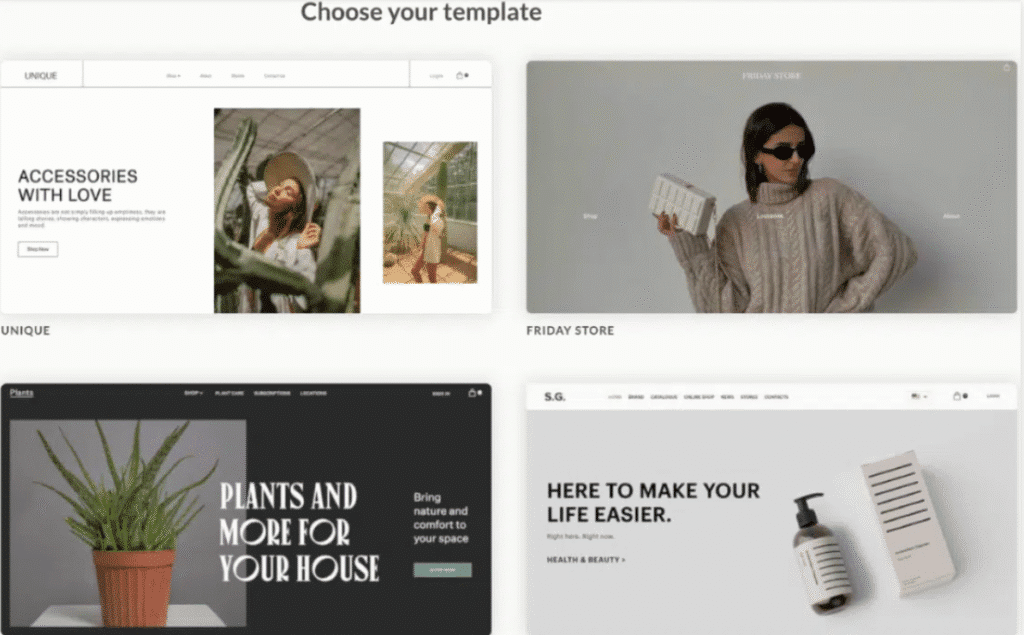
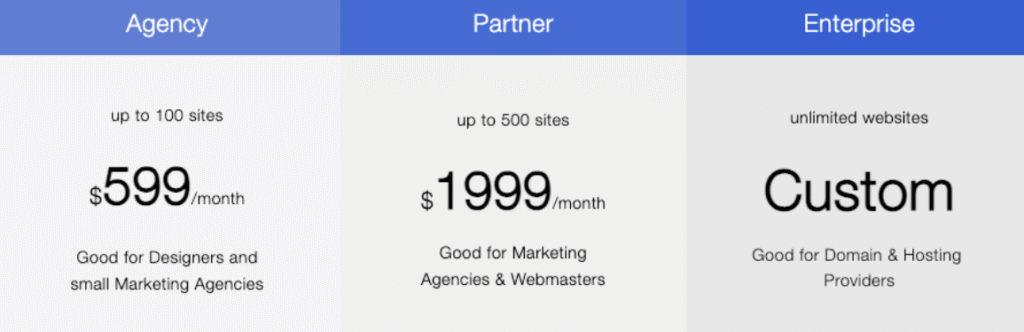
    1. Omnichannel Communication: A Seamless Customer Journey

    Omnichannel communication ensures consistent and cohesive customer interactions across multiple channels. By integrating email, social media, text messages, and chatbots, businesses can reach customers where they prefer. For example, a customer who expresses interest in a product might receive follow-up emails, text messages, and targeted social media ads. This holistic approach fosters engagement and provides a seamless customer experience, ultimately leading to increased retention and sales.
    1. Personalized Experiences: A Key to Sales and Loyalty

    Tailoring messages and offers to individual preferences is a powerful lead-generation technique. 75% of marketers recognize the pivotal role of personalization in driving sales and repeat business. By leveraging audience insights, businesses can deliver highly relevant content and offers. For instance, a hiking gear company can send targeted promotions to outdoor enthusiasts. Netflix exemplifies this strategy by recommending shows and movies based on viewer history, enhancing engagement and satisfaction.

    Conclusion 

    By analyzing these top B2B lead generation statistics, businesses can gain a critical advantage by identifying what’s working and what’s not. Ultimately, staying informed about these trends is not just beneficial, it is vital for creating a successful and cost-effective lead generation strategy in the coming year. Use these insights to refine your approach and achieve remarkable results.

    B2B Lead Generation Statistics
  • The Power of Print: 87 Shocking Print Marketing Statistics You Need to Know 2025

    The Power of Print: 87 Shocking Print Marketing Statistics You Need to Know 2025

    Print Marketing Statistics

    Print marketing statistics: Discover the surprising benefits of print marketing with these eye-opening statistics;

    It’s easy to assume that online marketing is the only way to reach your target audience. However, print marketing remains a powerful tool for businesses looking to make a lasting impression and drive results. Despite the rise of digital marketing, print marketing continues to deliver impressive returns on investment. Research shows that print marketing is still a highly effective way to reach and engage consumers. Print materials generate more responses and are seen as more trustworthy and memorable than digital ads.  

    Here are some surprising print marketing statistics that will make you rethink your marketing strategy.

    Key Print Marketing Statistics (Editor’s Pick)

    • 70% of consumers prefer to receive print ads over digital ads.
    • 62% of consumers visit a website after seeing a print ad.
    • 77% of consumers sort through their mail as soon as it’s delivered.
    • 70% of households with incomes above $100,000 read newspapers.
    • The response rate for direct mail is 5.1%, compared to just 0.6% for email marketing.
    • 67% of consumers have purchased online after seeing a product in a print catalog.
    • 80% of consumers say they are likelier to do business with a company that offers personalized print materials.
    • Print marketing has a median ROI of 29%, compared to 23% for digital marketing.
    • 55% of consumers look forward to receiving mail from their favorite brands.
    • 61% of readers trust newspaper ads compared to 42% for online ads.
    • Consumers are 75% more likely to remember a brand after seeing a print ad.

    General Print Marketing Statistics

    1. The global market for print-on-demand services was valued at $7.24 billion in 2023 and is projected to expand to $65.37 billion by 2032, exhibiting a compound annual growth rate (CAGR) of 27.7% during the forecast period from 2024 to 2032. (Source)
    2. Despite economic difficulties, 60 new print magazines were introduced in the United States in 2020, suggesting a persistent demand for print media. (Source)
    3. Integrating print and digital advertisements into online campaigns can boost their effectiveness by 400%. (Source)
    4. Advertising expenditure in the United Kingdom’s Print Advertising market is projected to attain $1.30 billion by 2024. (Source)
    5. Consumers tend to retain print advertisements for an average of 17 days, suggesting their enduring impact on purchasing decisions. (Source)
    6. Personalized print advertisements designed for individual recipients have been observed to yield a 135% increase in response rates. (Source)
    Print Marketing Statistics
    1. Nearly 80% of shoppers respond to printed direct mail ads, while only 45% take action on electronic ads. (Source)
    2. Print advertisements motivate consumers 20% more effectively, particularly when they engage multiple senses. (Source)
    3. According to projections, global print advertising expenditure is anticipated to reach $34.28 billion by 2024. (Source)
    4. The United States is the largest spender on print advertisements, with an estimated expenditure of up to $9.6 billion in 2024. (Source)
    5. Recipients of print advertising have been shown to purchase 28% more items and spend 28% more than those who do not receive print advertisements. (Source)
    6. Advertising expenditure in Germany’s print advertising sector is projected to reach $2.97 billion by the year 2024. (Source)
    7. Placing advertisements in niche magazines or local newspapers enables businesses to target specific demographics and interests effectively. (Source)
    8. A significant 95% of individuals under the age of 25 are reported to read magazines. (Source)
    9. A significant 44% of customers are reported to visit a brand’s website after receiving direct mail or print marketing materials. (Source)
    10. A significant 70% of Americans express a preference for reading printed mail. (Source)
    11. A significant 84% of Millennials dedicate time to perusing their physical mail. (Source)
    12. A significant 70% of households with incomes exceeding $100,000 are reported to read newspapers. (Source)
    Print Marketing Statistics
    1. A substantial 82% of consumers express the highest level of trust in print ads when making purchase decisions. (Source
    2. A substantial 64% of recipients express a preference for scanning their mail for useful information rather than relying on email. (Source)
    3. A survey revealed that 75% of Millennials perceive receiving personal mail as something special. (Source)
    4. A survey of Americans revealed that 56% of respondents consider print marketing to be the most trustworthy form of marketing. (Source)
    5. A study conducted by the American Press Institute revealed that 74% of individuals aged 16 to 40 obtain news from traditional sources, including print newspapers, weekly. (Source)
    6. Print readers typically dedicate 20 minutes or more to their publication, engaging with a greater amount of content. (Source)
    7. Close attention to print ads has experienced a more than twofold increase, rising from 23% in 2009-10 to 49% in 2020. (Source)
    8. Projections indicate that the global print advertising audience will expand to approximately 3.1 billion readers by the year 2029. (Source)
    9. Print marketing materials are known to have a more potent emotional impact on consumers. (Source)
    10. The combination of print ads and email marketing results in a 49% increase in sales and a 125% rise in inquiries. (Source)
    11. The UK Print Advertising market is projected to reach 24.2 million readers by the year 2029. (Source)
    12. The average advertising expenditure per reader in the UK Newspaper Advertising market is estimated to be approximately $62 in 2024. (Source)
    13. Consumers who receive print mail promoting online sites have been observed to spend 13% more than those who solely receive digital information. (Source)
    14. Research conducted by Fundera indicates that 70% of consumers perceive direct mail as more personal than online interactions. (Source)
    Print Marketing Statistics
    1. Print marketing demonstrates a recall rate that is 70-80% higher than digital advertising. (Source)
    2. The Print Advertising market in China is anticipated to reach $1.96 billion in advertising spending by the year 2024. (Source)
    3. The number of readers in China’s Print Advertising market is expected to attain 600 million by 2029. (Source)
    4. The Print Advertising market in China is undergoing a shift towards digital integration, emphasizing interactive and data-driven campaigns. (Source)

    Direct Mail in Print Marketing Statistics

    1. Direct mail significantly speeds up the purchasing process. While typical purchase decisions take over a week and more than a third take a month, direct mail can drive purchase decisions in just over a day for 73% of consumers. (Source)
    2. Newsletters and postcards are US marketers’ most popular direct mail formats, followed by self-mailers, catalogs, and packages. (Source)
    3. Combining digital and direct mail marketing strategies can boost response rates by 63%, website visits by 68%, and lead generation by 53%. (Source)
    4. Direct mail consistently delivers the highest return on investment (ROI) compared to other marketing channels, with a 112% ROI. SMS, email, paid search, social media advertising, and digital display advertising have ROIs ranging from 79% to 102%. (Source)
    5. Jumbo-sized envelopes reign supreme in direct mail response rates, outpacing postcards (5.7%) and standard letter envelopes (4.3%). (Source)
    6. Direct mail campaigns outperform other marketing methods, delivering 27% higher top-tier sales and 40% higher top-level customer acquisition. (Source)
    7. Many people across generations miss physical mail: 57% of boomers, 45% of Gen X, 41% of millennials, and 37% of Gen Z. (Source)
    8. Direct mail crushes digital channels in terms of response rates, outperforming them by a whopping 600% (based on the 2018 DMA Response Rate Report). (Source)
    9. Direct mail is a powerful motivator, with 62% of consumers taking action and 64% citing offers or promotions as the driving force. (Source)
    10. A majority of consumers (70%) favor traditional mail for unsolicited marketing offers. (Source)
    11. The average direct mail spending per person in the United States was between $100 and $550 in 2022, according to a Winterbury Group report. (Source)
    12. For every $167 invested in direct mail in the US, businesses can expect to generate $2,095 in sales, resulting in a 1,255% return on investment. (Source)
    13. Direct mail advertising introduces 39% of customers to new businesses. (Source)
    Print Marketing Statistics
    1. U.S. homes get bombarded with an average of 454 marketing mail pieces annually. (Source)
    2. Almost half of people save direct mail for later use. (Source)

    Newspaper, Print Marketing Statistics

    1. The newspaper advertising market is the dominant sector within the global print advertising market, expected to reach a market volume of $23.57 billion by 2024. (Source)
    2. The average estimated expenditure on newspaper advertisements per reader in 2024 is approximately $18.95. (Source)
    3. Nearly 80% of newspaper readers have taken action in response to an advertisement they saw in the newspaper within the past month. (Source)
    4. A significant 82% of consumers use the print coupons they receive through newspapers. (Source)
    5. Consumers view newspapers as the most effective medium for promoting sales. (Source)
    6. A large majority of newspaper readers (91%) report taking some kind of action after seeing inserts in newspapers. (Source)
    7. Newspaper advertising is the largest segment within the Chinese print marketing market, with a market volume of $1.59 billion in 2024. (Source)
    8. The average ad spending per reader in China’s newspaper advertising sector is projected to be approximately $6.64 in 2024. (Source)
    9. In 2018, the estimated daily print and digital newspaper circulation in the United States was 28.6 million on weekdays and 30.8 million on Sundays, with the average reader spending about 12 minutes per day reading the newspaper. (Source)
    Print Marketing Statistics
    1. Newspaper advertising is the dominant segment within the UK print advertising market, accounting for $0.91 billion in 2024. (Source)
    2. In 2022, the leading advertising media in the UK were the internet, television, radio, and newspapers, with estimated expenditures of $14.2 billion, $3.3 billion, $1.1 billion, and $950 million, respectively. (Source)
    3. The global newspaper advertising market is projected to shrink by 5.24% between 2024 and 2029, with an estimated market value of $25.48 billion in 2029. (Source)

    Digital vs Print Marketing Statistics

    1. Physical print ads require 21% less cognitive effort to read and retain compared to digital ads. (Source)
    2. Accenture reported a 20% decline in global offline commerce revenue by 2021, with the U.S. B2B Commerce market reaching $1.2 trillion. (Source)
    3. Print and direct mail marketing has a 9% customer response rate, significantly higher than the 1% or less response rate for other digital channels. (Source)
    4. In 2019, Instagram had a slightly larger user base than print readers, with 113.3 million users compared to 112.7 million print readers. (Source)
    5. Over 90% of consumers find print ads easier to read than digital ones. (Source)
    6. As of 2019, while 33% of Millennials use ad blockers, 62% of people prefer to read paper ads instead of discarding them. (Source)
    7. Individuals are 70% more likely to recall businesses from print ads compared to online ads. (Source)
    8. Paid search ads can enhance brand awareness by 80%. (Source)
    9. By 2020, 50% of the advertising budget was projected to be allocated to online advertising, equaling traditional market spending globally. (Source)
    10. Video ads exhibit a 73% higher click rate than display banners. (Source)
    11. According to BannerSnack, 54% of users avoid clicking on ads due to distrust, and 33% find display ads unacceptable. (source)
    12. A significant 61% of readers trust newspaper ads, compared to 42% who trust online ads. (Source)
    13. A significant 70% of internet users express a preference for obtaining product information through content rather than traditional ads. (Source)
    14. A significant 88% of magazine readers in the UK express a preference for the print format. (Source)
    15. A significant 47% of customers utilize ad-blocking technology online. (Source)
    16. A significant 91% of consumers acknowledge that print and paper are sustainable when responsibly produced, used, and recycled. (Source)
    17. Approximately 45% of global shoppers engage in online shopping with in-store pickup. (Source)
    18. Print media is favored for face-to-face interactions, such as trade shows. (Source)
    Print Marketing Statistics
    1. Up to 90% of Direct Mail is opened, compared to only 20-30% of emails. (Source)

    Challenges (Print Marketing Statistics)

    The global print advertising sector is transitioning towards digital platforms, impacting traditional print media revenues and approaches.

    1. Advertising revenue in the printed marketing industry is projected to decline to $40 million in 2023 and $35 million in 2025. Newspaper ad revenue will decrease from $30 million to $24 million, and magazine marketing expenditure will drop from $13 million to $10 million by 2025. (Source)
    2. Magazine ad revenues are also expected to decrease, falling from $20.6 billion in 2012 to $12.1 billion this year, and further to $6.6 billion by 2024. (Source)
    3. Traditional advertising spending across formats such as newspapers, television, and outdoor advertising is projected to decline globally by 20.7%. (Source)
    4. Marketers identify high costs (51%), limited reach (32%), distribution logistics (31%), difficulty targeting audience segments (31%), and difficulty measuring ROI (28%) as significant challenges associated with print materials. (Source)
    5. GroupM forecasts a 50% decline in newspaper ad revenue within five years, dropping from over $25 billion in 2012 to $5.5 billion. (Source)
    6. Daily newspaper readership has fallen from approximately 63.3 million in 1984 to under 28.5 million in 2018. Sunday circulation peaked at 62.6 million in 1993 and dropped to 30.8 million in 2018. (Source)

    Conclusion (Print Marketing Statistics)

    Print marketing continues to hold its ground, statistics show that print remains a powerful tool, capable of creating deeper connections with consumers and driving concrete results.

    Digital marketing might be on the rise, but print marketing still holds its ground. Savvy marketers combine the best of both worlds to create a more impactful reach.

    Print Marketing Statistics